
1950s Men’s Hairstyles
Most men kept their hair clean, neat, and structured using heavy-hold pomades or hair creams. Brylcreem was one of the premier products of the era; its signature promise to give men “a little dab” made hair dandy, easy to comb, and slick and shiny. While a businessman favored a simple side part with a soft wave, younger men leaned into bold, counter-culture looks like dramatic pompadours and slick greaser styles.
The Classic 1950s Side-Part
A simple, short side-part was the defining day-to-day style for the average working man. The sides were tapered close, while the top retained enough length to form a subtle, clean wave. It delivered a sharp, professional appearance that held its shape all day thanks to a generous coat of pomade. This timeless cut was versatile enough for the classroom, the boardroom, and formal evening events.
-
Historical Context: This style was so dominant in corporate America that it became the unofficial dress-code standard for executives, earning it the nickname “The Executive Contour.”
Crew Cut
The crew cut was a cornerstone of 1950s men’s grooming. Cropped short on top and shaved even tighter along the sides, it was effortlessly low-maintenance while keeping a crisp silhouette. It was a go-to choice for athletes, high school students, and military personnel returning to civilian life. A popular variation was the Ivy League haircut. Sharing the same foundational shape as the crew cut, it left just enough length at the front to allow the hair to be neatly parted and combed to the side.
-
Historical Context: Originally popularized by Ivy League rowing teams in the 1920s so oarsmen could keep their hair out of their eyes without shaving their heads, the cut exploded in mass popularity after millions of WWII veterans brought the military crop back home.
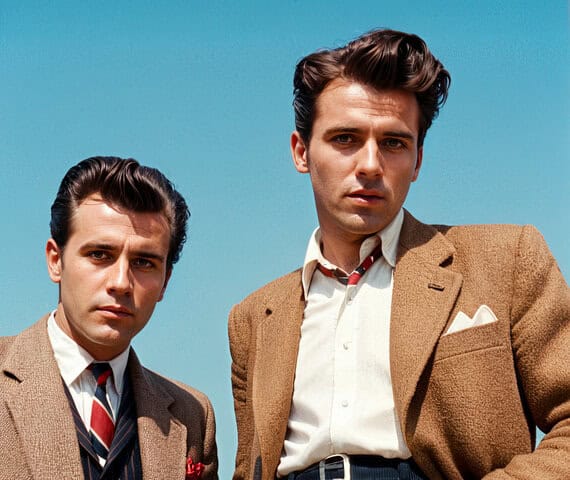
Quiff and Short Pompadour
Both the quiff and short pompadour relied on added length at the front to create eye-catching volume. Hair was brushed up, rolled back, and sculpted into place using pomade or early hairsprays. Some men opted for subtle wave curls in the front and back to soften the structure. These styles offered a modern, fashionable edge while remaining tidy enough for school or office standards.
-
Historical Context: The term “pompadour” actually originated from Madame de Pompadour, the chief mistress of King Louis XV of France; a royal women’s fashion from the 18th century was adopted two hundred years later as the ultimate symbol of mid-century male cool.
Flat Top
The flat top remains one of the most iconic shapes of 1950s hair architecture. Cut perfectly level across the crown, it created a flat, boxy surface while keeping the sides closely cropped. Some men kept the sides slightly longer, combing them back with gel to frame the silhouette. Bold and structurally striking, the flat top was favored by young men, athletes, and boys looking for a sharp, athletic look.
-
Historical Context: Barbers had to use specialized flat-top combs equipped with tiny spirit levels (bubble levels) to ensure the top plane of the haircut was perfectly horizontal.
Butch Cut
The butch cut—also frequently called a brush cut—took the low-maintenance crew cut a step further. The hair was clipped to an identical, uniform length all around the head. Requiring virtually zero daily styling, it stayed neat through long hours and physical activity. This hairstyle was common with sporty teens, as well as men who wanted a clean, simple cut.
-
Historical Context: During the 1950s post-war suburban boom, the butch cut became the classic haircut for young boys, as barbers could turn them out in under five minutes using electric clippers set to a #2 guard.
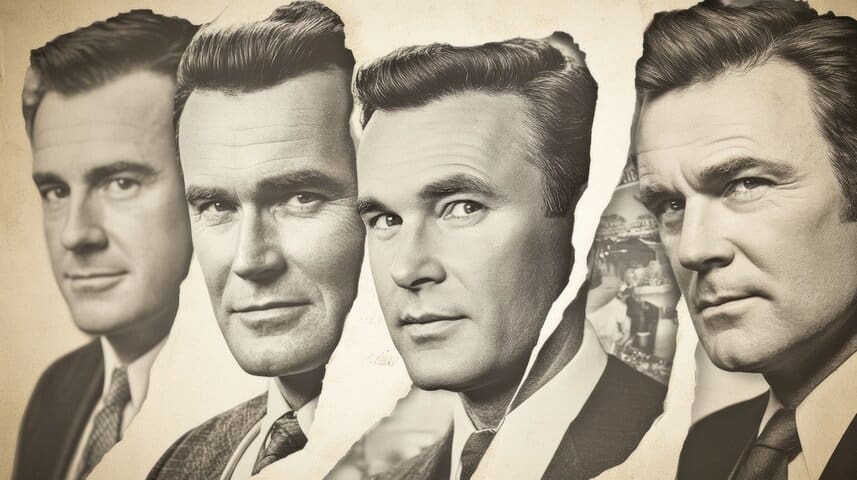
Conked Hair
Many African American men wore a highly styled look known as the conk. This involved using chemical relaxers to straighten naturally coily hair, making it smooth, pliable, and easy to mold. The finished product featured soft waves or precise side parts, mirroring the mainstream trends of the decade. Performers such as Little Richard and Chuck Berry wore longer and more dramatic versions that became tall pompadours. pompadours.
-
Historical Context: The term “conk” derived from “congolene,” a harsh home-brewed relaxer made from lye, eggs, and potatoes that burned the scalp intensely if not washed out at the exact right second.
Short Afro
Some men preferred to wear their hair naturally. The short afro became a clean, round style that did not require the use of chemicals. It looked neat and could be given the shape of the head. There were even men who brushed oil into the hair to make it shiny. This early Afro inspired bigger versions to follow later in the 1960s.
-
Historical Context: Jazz musicians like Duke Ellington and Miles Davis helped pioneer natural grooming choices in the late 1950s, bridging the gap between mid-century neatness and the Civil Rights movement’s “Black is Beautiful” ethos.
Caesar Cut
The Caesar cut featured short hair on top with small level bangs cut straight across the forehead. This fashion was most appropriate for thick, straight hair. It was popular with boys and men in rural areas who wanted a tidy, easy-to-maintain look.
- Historical Context: The style was directly modeled after statues of Julius Caesar, who reportedly brushed his hair forward in this exact manner to hide his receding hairline.
Breaker or Hollywood Cut
The breaker style used a lot of product to create the waves on top. It was similar to a soft pompadour, but required more combing and styling. This haircut was seen frequently in the movies and was worn by Hollywood actors. It had waves without hair that were smooth and shiny and looked sleek and polished.
-
Historical Context: Movie studios had dedicated hair departments that used specialized stage lights to bounce off the high-gloss pomade, making actors’ hair literally shine on black-and-white film.
Greaser Hairstyles
Greasers were young men who favored strong, defiant styles. They used a heap of pomade to make their hair shiny and slippery. Some wore simple cuts, such as butch cuts or flat tops, but others came up with long pompadours or shaped curls over the forehead.
A greaser style would often include: Shiny hair, thick sideburns, messy or high front, leather jackets and white T-shirts. This look was made famous via rock ‘n’ roll music and movies.
-
Historical Context: The nickname “Greaser” was originally an insult hurled by middle-class adults at working-class youth who worked on street rods and motorcycles, but the teenagers proudly claimed the now iconic snub!
Long Pompadour
One of the boldest looks of the decade was the long pompadour. The hair of the front was allowed to grow longer so that it could be lifted high. James Dean and Elvis Presley immortalized this style. Some pompadours were soft and smooth. Others were tall and dramatic. Both versions used large amounts of pomade to hold their form.
- Historical Context: Elvis Presley was naturally a dirty-blonde, but dyed his hair jet black specifically to make his tall pompadour look thicker, darker, and more dramatic under stage lights.
Boogie Style
Boogie style was not a hairstyle in itself. It was a way of styling. Hair was swept forward and inward to form a thick roll in front. Short haircuts such as the flat top or the crew cut could be molded into a boogie using enough product.
- Historical Context: The name originated from the “Boogie-Woogie” music and dance craze, as the hair was styled specifically to withstand the violent dipping and shaking of swing dancing without losing its structure.
Jelly Roll
One of the most dramatic 1950s new ways to have hair was the jelly roll. Longer hair was combed up and back from either side until it was rolled across the forehead. This style was very popular with British Teddy Boys and American performers.
- Historical Context: The name was taken from the popular mid-century bakery dessert, a rolled sponge cake filled with jam, because the hair across the forehead mirrored the exact cylindrical swirl of the cake!
Elephant Trunk
The elephant trunk was a small piece of hair that hung down the head from a pompadour or jelly roll. Down in front of the forehead was curved. Some versions were small and others were long and dramatic.
- Historical Context: Teenagers would deliberately pull this single curl down while sitting in high school classrooms as an act of quiet rebellion against strict school dress codes.
D.A. (Ducktail)
The D.A. (short for Duck’s Ass) was a styling method in which the back of the hair was combed up to the middle to form a shape that resembles a duck’s tail. They were often paired with pompadours or greaser styles. Both men and women wore this look at this time.
- Historical Context: School principals across North America banned the D.A. in the late 1950s, considering the rear ridge so scandalously suggestive that students caught with it were sent home with orders to comb it out or get a crew cut.