
The Hula Hoop Craze: America’s Biggest 1950s Toy Trend
The 1950s were a decade full of change in America. Families were multiplying, suburbs were being built, and children occupied neighborhood streets. It is during this time that simple toys often became national sensations. One of the largest toy fads of the decade was the hula hoop.
The Hula Hoop Craze: America’s Biggest 1950s Toy Trend
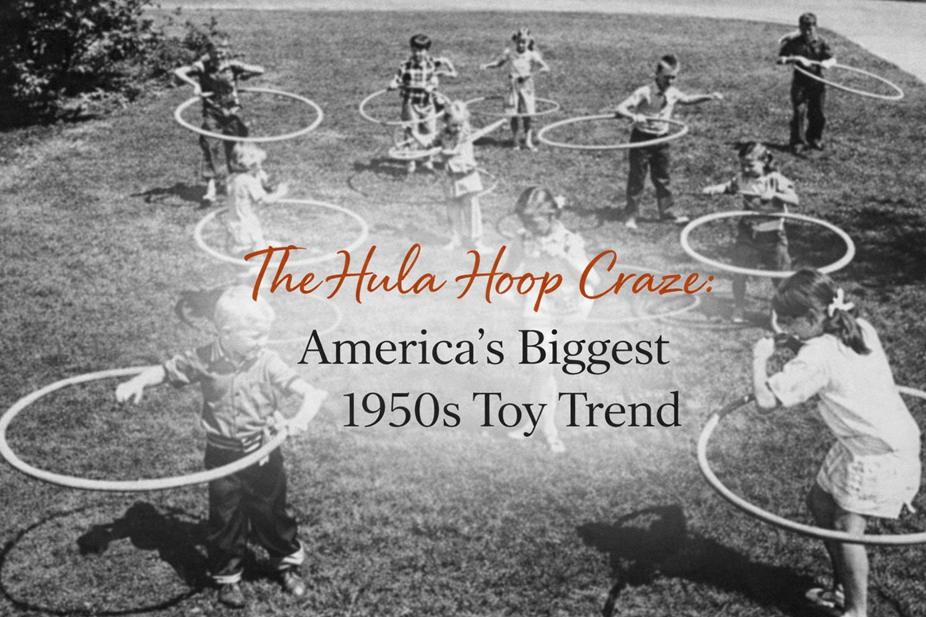
In 1958, the hula hoops became more than just toys. It became a cultural craze. Millions of Americans, children and adults, joined in the fun almost overnight.
Where Did The Hula Hoop Originate From?
Hoop spinning is not new. Ancient cultures in Egypt and Greece used hoops for exercise and play. In the early 1900s, children in many countries played with wooden hoops.
The modern plastic hula hoop became popular in the United States thanks to the toy company Wham-O. The founders of the company saw kids in Australia using bamboo hoops to exercise. They decided to make a lightweight plastic version and sell it in America.
They called it the “Hula Hoop” because the way people’s hips moved reminded them of Hawaiian hula dancers.
The 1958 Explosion
Wham-O officially released the plastic hula hoop in 1958. The response was instant and overwhelming.
Within just a few months:
- Millions of hoops were sold
- Stores found it difficult to hold them in stock
- Children practicing
 spinning them at school and at home
 spinning them at school and at home
Some reports put sales in the first four months at over 25 million hula hoops. By the end of the year, sales had exceeded 100 million.
It became one of the biggest-selling toys in American history.
Why Did It Become So Popular?
There were many reasons for the hula hoop craze’s rapid growth.
- First, it was simple. You did not need batteries or instructions. You only needed space to spin.
- Second, it was affordable. Most hoops are available for just a few dollars, making them easy for families to purchase.
- Third, it was active. In the 1950s, children played outside a lot. The hula hoop provided them with a fun way to move and compete with their friends.
It also appealed to adults. Many parents joined their children, and this became a family activity.
Schools and Competitions
As the craze swept across the world, schools started hosting hula hoop competitions. Children had a competition to see who could spin the hoop the longest.
Some learned creative tricks:
- Spinning several hoops at the same time
- Moving the hoop from the waist to the arms
- Making up choreographed routines
Television shows even featured hula-hoop performers. The toy became part of pop culture in the United States.
A Symbol of 1950s Youth Culture
The hula-hoop craze was ideally suited to the youth culture of the 1950s. The decade was defined by emphasizing family life and the growing number of children owing to the Baby Boom.
Suburban neighborhoods were littered with kids out playing. The hula hoop became a familiar sight on the sidewalks and driveways.
It was also the spirit of playfulness and optimism that was prevalent during that time period. After years of war and hardships during the 40’s, family life during the 50’s consisted of simple pleasures.
The Craze Slows Down
Like many toy fads, the excitement did not last forever. By 1959, sales began to slow.
As quickly as the craze began, however, it died down. Children moved on to new toys and fads. However, the hula hoop never completely went away.
It continued as a classic toy and reappeared in succeeding decades as a physical trainer as well as an item of nostalgia.
Lasting Impact
Although the largest fad lasted only about a year, the hula hoop lasted longer.
It showed how:
- Simple ideas are playing the role of a national trend
- Television and advertising can be used to fuel the sale of toys
Youth Culture Can Influence Consumer Habits
The success of the hula hoop also helped Wham-O become a huge toy company. The company went on to produce other fad toys such as the Frisbee and the Super Ball.
Today, hula hoops continue to be used for exercise and entertainment. Modern fitness classes even use weighted hoops for workouts.
Why It Still Matters
The hula hoop craze is remembered as one of America’s largest toy trends of the 1950s because of how quickly it caught on and how widely it was accepted.
It was more than a toy. It was:
- A symbol of suburban childhood
- A unified national experience
- A reminder of simpler times
For most Americans who grew up in the 1950s, their memories of whirling around in a colorful plastic hoop in the driveway are strong.
The hula hoop craze of 1958 demonstrated how a simple plastic ring swept an entire nation. In a decade marked by growth and optimism, the hula hoop came to be a joyful symbol of youth and energy.
Though the craze fizzled out, its place in American history is assured as one of the biggest toy fads of the 1950s.