
Popular 1950s Board Games and Family Entertainment at Home
Board games in the 1950s were a very important part of the family’s entertainment at home. During this decade, many families had their evening together in the living room rather than in front of several screens or digital devices. Board games provided an easy and fun way for parents and children to chill, laugh, and spend time together.
Television had started to hit homes back in the 1950s, but it was not yet replacing conventional forms of entertainment. Families still valued activities that required conversation and interaction. Board games fit right into this lifestyle as they are affordable, easy to play, and fun for everyone, without the age restrictions.
Owing to this, many classic games became household favorites during this period. Some of these games are still popular today and still bring families together around the table.
Why Board Games Were Popular in the 1950s
Several things contributed to the popularity of board games in the 1950s. One of the main reasons was the increasing emphasis on family time. After dinner, families would often gather in the living room and talk, listen to the radio, watch television, or play games together.
Board games were also easy to learn and required very little equipment. A game board, playing pieces, and simple rules were all that was required. Because of this, board games became a common form of entertainment both for children and adults.
Another cause for their popularity was an increase in suburban living. As families moved into suburban homes with more space, they often had dining tables or family rooms where games had a comfortable space to be played.
Board games became a regular part of weekend gatherings, rainy afternoons, and family nights.
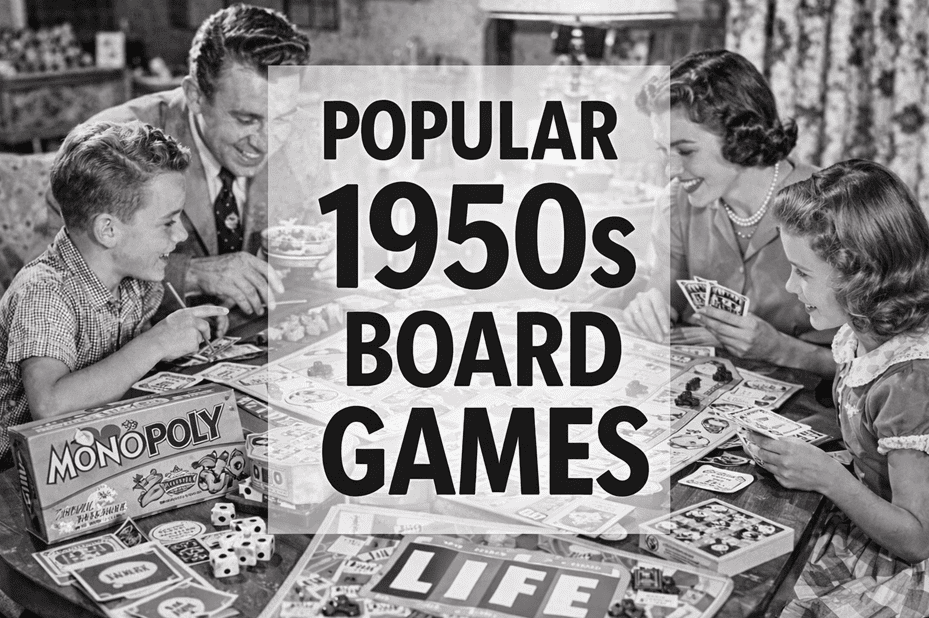
Monopoly: A Household Favorite
One of the better-known board games of the 1950s was Monopoly. Although the game had been introduced at an earlier time, it became extremely popular in the mid-twentieth century.
Monopoly lets the players purchase properties, collect rents, and build houses and hotels while moving around the board. The idea was to play tight with money and eventually be the richest player.
Families enjoyed playing the game as it involved strategy, luck, and friendly competition. Monopoly games tended to last for hours, so they were ideal for long evenings at home.
The game also reflected the increasing interest in business and ownership of property in the decade.
Scrabble and the Love for Word Games
Scrabble became another family entertainment favorite in the 1950s. This word game challenged players to try to make words from letter tiles and place them on a crossword-type board.
Scrabble had mass appeal to families, who liked to both compete and to learn. The game made it fun to increase the vocabulary of the players.
Because of the level of thinking and creativity involved, Scrabble was often played by both adults and older children. It became a favorite activity for the family, who enjoyed quiet evenings together.
The educational value of the game helped the game stay popular in homes throughout the country.
Checkers and Chess
Traditional board games such as checkers and chess were also popular throughout the 1950s. These games were played for generations and were still enjoyed by families and friends.
Checkers was easy enough for young kids to quickly learn the game with less strategic thinking and planning than chess. Many of the parents used these games as a means to teach patience, concentration, and problem-solving skills.
Due to the simple rules and low cost of the equipment, these traditional games were present in many households. They also provided a respite from other, more fast-paced forms of entertainment.
Card Games for the Family Gathering
In addition to playing board games, another popular form of entertainment at home was card games. Families frequently had a deck of playing cards at home to play with for informal games and events.
Popular card games were Go Fish, Old Maid, and Rummy. These games were easily learnable and could be played by people of various ages.
Card games were particularly useful with larger family groups because a lot of players could play at the same time. They were also convenient to travel in and were a favorite activity during vacation or for visiting relatives.
These simple games enjoyed variety in family entertainment during the decade.
Puzzle Games and Educational Activities
Puzzles were also a popular type of family entertainment in the 1950s. Many families liked to work together to complete large jigsaw puzzles on a table in the living room.
Puzzles encouraged patience and teamwork. Often, family members would spend several evenings working on the same puzzle until it was all finished.
Educational games were also quite common. Some board games were spelling, geography, or basic math skills. Parents liked games that enabled children to learn while having fun. These activities helped make learning part of everyday family life.
How Board Games Brought Families Together
One of the most important aspects of board games in the 1950s was the way that they encouraged interaction between family members. Unlike modern-day digital entertainment, board games required players to sit together, talk, and share the experience.
Parents and children were able to laugh at unexpected results, celebrate victories, and learn how to deal with friendly competition. Such shared experiences helped to strengthen the family relations.
Game nights also established traditions that the children remember for years to come. Simple activities such as rolling dice, drawing cards, or moving pieces around a board came into meaning as part of family life.
The Lasting Appeal of 1950s Board Games
Many of the variety of board games that were played in the 1950s continue to be played today. Classic titles like Monopoly and Scrabble have remained popular because they are easy to learn and are fun for people of different generations.
Even though modern entertainment now includes video games and digital apps, there is still something unique about traditional board games. They foster conversation, scenario collaborations, and shared experiences that are hard to replace.
Looking back at the board games of the 1950s, we are reminded of a time when entertainment for the family was simple, social, and a time to spend together at home. These games helped to build lasting memories and are an important part of cultural history.