
How Advertising in the 1950s Shaped Consumer Culture
Advertising was a strong influence in bringing about consumer culture in the 1950s. After World War II, the United States enjoyed good economic growth, and many families had more money for leisure activities than ever before. As companies began to put new products on the market, advertising became an important tool in attracting customers and gaining brand loyalty.
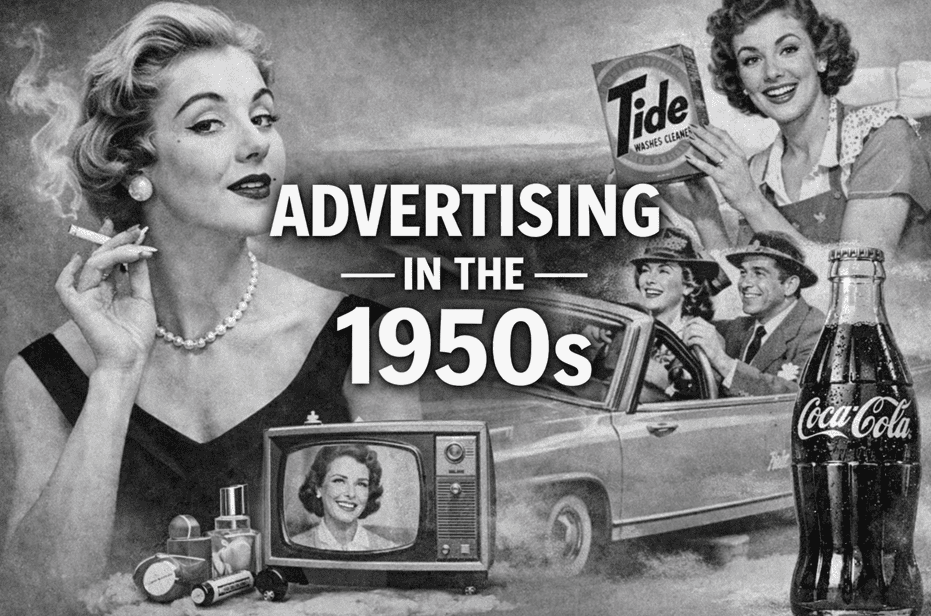
1950s advertising was seen everywhere, from magazines and newspapers to radio programs and the super-fast-growing medium of television. Businesses took advantage of creative marketing tools to influence families into buying household appliances, packaged foods, automobiles, and many other consumer goods.
This period was a turning point in the way companies promoted products. Advertising did more than inform people about items for sale. It helped formulate lifestyles, influenced the way of buying, and presented the idea that modern products could improve everyday life.
The Growth of Consumer Culture After World War II
The emergence of 1950s advertising was strongly linked to the economic boom that followed the Second World War. Factories that had turned out war equipment shifted to producing consumer goods like refrigerators, washing machines, televisions, and automobiles.
With increased wages and better jobs, many families were able to afford things that used to be thought of as luxuries. Businesses noticed this new and expanding market, and therefore, they became more active in their advertising attempts to reach consumers.
Advertising campaigns were often geared to convenience and modern life. Companies promoted their products as indispensable aids for the creation of a comfortable and successful household. These messages urged people to view shopping not only as a necessity but as a means of enhancing their quality of life.
The Rise of Television Advertising
One of the most significant changes in advertising during the 1950s was the growth and spread of television. By the middle of the decade, the television set had become common in the home in the American market. This new technology gave companies a powerful way of promoting their products.
Television commercials used moving pictures, music, and spoken messages to attract the attention of the viewers. Advertisers often used cheerful jingles and memorable slogans that made products easy to remember.
Many companies sponsored entire television programs as a marketing strategy. Popular shows were sometimes branded through their sponsors, which allowed businesses to link their products with entertainment that families enjoyed.
Due to the simultaneous reach of the television, it quickly became among the most effective forms of advertising used during the decade.
Print Advertising in Magazines and Newspapers
Although television assumed increasing importance, print advertising still made a significant contribution to marketing in the 1950s. Magazines and newspapers regularly carried colorful advertisements promoting household goods, cosmetics, brands of food, and automobiles.
Magazine ads made it a point to lure the readers. They often contained bright illustrations or photographs as well as persuasive descriptions explaining why the product was useful.
Many advertisements depicted idealized scenes in which the family lives. A smiling family gathered around a dinner table or modern kitchens that were full of appliances helped to reinforce the message that new products could make for a happier home.
These images played an important role in painting the image of modern living for consumers.
Advertising and the Ideal American Household
A common theme throughout advertisements in the 50s was the image of the perfect household. Advertisements often were targeted at families that lived in comfortable suburban homes with modern appliances and stylish furnishings.
Many of the advertisements were aimed at women, particularly women who are homemakers and in charge of buying grocery products, cleaning supplies, and household fixtures. Companies marketed such things as washing machines, vacuum cleaners, and packaged foods as devices that could make housework lighter.
By introducing new technologies and brands in the form of solutions to real-life issues, advertisers encouraged families to adopt new products.
At the same time, often advertisements highlighted family life in a positive and idealized light, which helped to shore up the social expectations of the time.
The Creation of Brand Loyalty
Another significant feature of 1950s advertising was the attempt to establish long-term relationships between companies and customers. Businesses wanted consumers to know and trust their brands.
To do this, advertisers employed slogans, mascots, and unique packaging. Characters and brand symbols helped make products memorable, especially to children and families.
Many of the advertisements were repeating the same messages in different media such as radio, television, and print. This repetition helped to strengthen brand recognition and encouraged customers to continue buying the same products.
As a result, brand loyalty became an important element of consumer culture.
Advertising and the Growth of Modern Marketing
The techniques created in the 1950s contributed to the way advertising is done today. Marketing agencies started to study more carefully the behavior of consumers, in order to devise more effective campaigns.
Advertisers carefully paid attention to how people reacted to images, catch phrases, and product demonstrations. They tinkered with various ways of presenting products to make them more appealing.
This time also witnessed the rise of professional advertising agencies that specialized in developing campaigns for large companies. These agencies used both creativity and research to influence choices made by consumers.
Many of the strategies developed during this decade continue to be used in marketing today.
Enduring Impact of 50’s Advertising
The effects of 1950s advertising can still be applied in modern marketing. Techniques like television commercials, brand character, catchy phrases, and lifestyle-focused messaging continue to be used in advertisements today.
This era also helped to establish the idea that advertising could shape not only the ideas of buying, but also cultural trends. Companies learned that they could use marketing to influence the way people thought about products, lifestyles, and even social expectations.
By promoting the benefits of modern consumer goods, 1950s advertising helped create a culture in which shopping and brands became inextricably linked to one’s everyday life.
The advertising strategies that were devised during this period still influence the way in which businesses communicate with consumers today.