
How the Baby Boom Transformed Suburbia in 1950s America
After the Second World War ended in 1945, major changes came to the United States. Soldiers returned home. The economy grew. Families were hopeful for the future. During this period, millions of babies were born. This sudden increase in births is known as the baby boom.
How the Baby Boom Transformed Suburbia in 1950s America
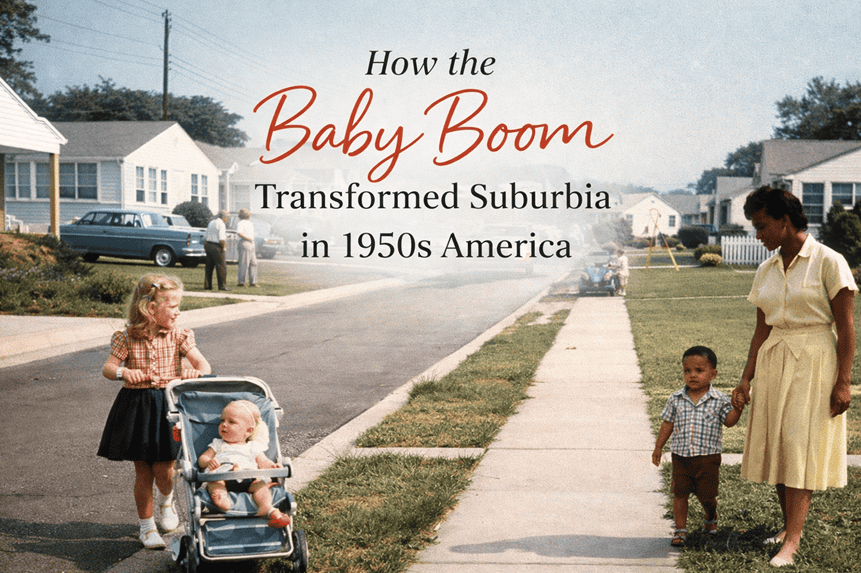
Between 1946 and 1964, over 76 million babies were born in America. Maximum growth occurred during the late 1940s and 50s. This increase in population altered where and how Americans lived. One of the large impacts of the Baby Boom was the rapid growth of suburbia.
Why Families Moved to the Suburbs
Before the 1950s, many families lived in the cities. But after the war, life started to change. Several things induced families to move to the suburbs.
First, the government provides support for the veterans through the GI Bill. This program helped returning soldiers purchase homes on low-cost loans. Home ownership became more attainable and affordable.
Second, new highways have made commuting easier. Families were able to live outside the city and travel to work.
Third, suburban homes tended to be cheaper than housing in the cities. They also provided more space, which growing families needed.
The Emergence of Planned Communities
One of the best-known of suburbia was Levittown, constructed in New York in 1947. Developers developed large neighborhoods using similar houses that were built quickly and inexpensively.
These were planned communities that included:
- Small single-family homes
- Front and back yards
- Driveways and garages
- Nearby schools and shopping malls
Mass production methods enabled the construction of thousands of homes in a short time. This enabled young families to purchase houses more quickly than ever before.
The Development of the Nuclear Family
The Baby Boom reinforced the concept of the nuclear family. Many households consisted of a working father, a stay-at-home mother, and several children.
Suburban homes were designed with this family structure in mind. They had:
- Multiple bedrooms
- Modern kitchens
- Living rooms to gather as a family
- An outdoor area where children can play
Backyards were now places to host barbecues and birthday parties. Neighborhood streets were full of bikes and games.
Expansion of Schooling and Services
As the number of children increased, communities also had to grow. Suburbs constructed new schools as soon as they could handle the demand.
By the mid-1950s:
- Elementary schools were growing
- High schools were overcrowded
- Teachers were in high demand
Other services grew too. Grocery stores, medical clinics, and churches opened around residential areas. Suburbs were becoming self-contained communities, rather than simple housing developments.
Economic Growth and Consumer Culture
The Baby Boom also boosted economic growth. More families meant more money to spend. Suburban households purchased cars, appliances, and televisions.
During the 1950s:
- Car ownership increased
- Supermarkets expanded
- Television sets became commonplace
- Household appliances such as washing machines came into fashion
Centres of consumer culture were suburbs. Shopping centers replaced small local shops. Convenience became part of everyday life.
The Role of Highways
One of the things that the Federal-Aid Highway Act of 1956 helped with was connecting suburbs to cities. Highways made travel faster and easier.
Workers could:
- Live farther from their jobs
- Travel every day from the suburbs to the cities and vice versa
- Visit shopping centres away from Town Centres
- Highway construction helped the suburban neighborhoods spread out over large areas.
Social Changes and Challenges
While suburban growth created opportunity, it also created problems. Many of the suburban neighborhoods were racially segregated. African American families were frequently discriminated against in the process of acquiring homes in some areas.
This inequality determined housing patterns for decades. The growth of suburbia was not equal for all.
At the same time, suburban life felt uniform at times. Houses looked similar. Streets were patterned after the same designs. Some critics argued that suburbia lacked diversity and excitement.
Persisting Impact on American Life
The Baby Boom changed American society forever. Suburban growth influenced education, transportation, housing, and family life.
By the end of the 1950s:
- Millions of Americans live in suburbs
- Car culture had expanded
- Shopping malls were rising
- Schools and playgrounds filled neighborhoods
Suburbia became a symbol of the American Dream. Owning a home and having a yard symbolized stability and success.
The Baby Boom changed suburbia in 1950s America in powerful ways. A growing population spurred an increase in the demand for housing, schools, roads, and consumer goods. Families left behind the crowded cities and moved into newly built neighborhoods for children and comfort.
While the growth of suburbs meant opportunity and economic growth, they also demonstrated social inequalities that persisted into later decades. Even today, many facets of modern American life-from patterns of commuting to neighborhood design-are based on the changes that commenced during the Baby Boom.