
You know the feeling. Payday arrives, the bills go out, and a few days later your balance is close to zero with a week or more until the next deposit. It’s stressful, and it’s easy to blame yourself. Most of the time, though, it isn’t a character flaw. It’s a math problem, and math problems have solutions.
Our grandparents solved plenty of them. Many raised families on a single paycheck, weathered lean years and still paid off the house. They had no budgeting apps or online banking, just a pencil, a stack of envelopes and a firm rule against waste. One look at what things cost in the 1950s shows how far every dollar had to stretch. Those habits still work today, and a few modern tools make them even easier.
Start Where Grandma Did: Know Every Dollar
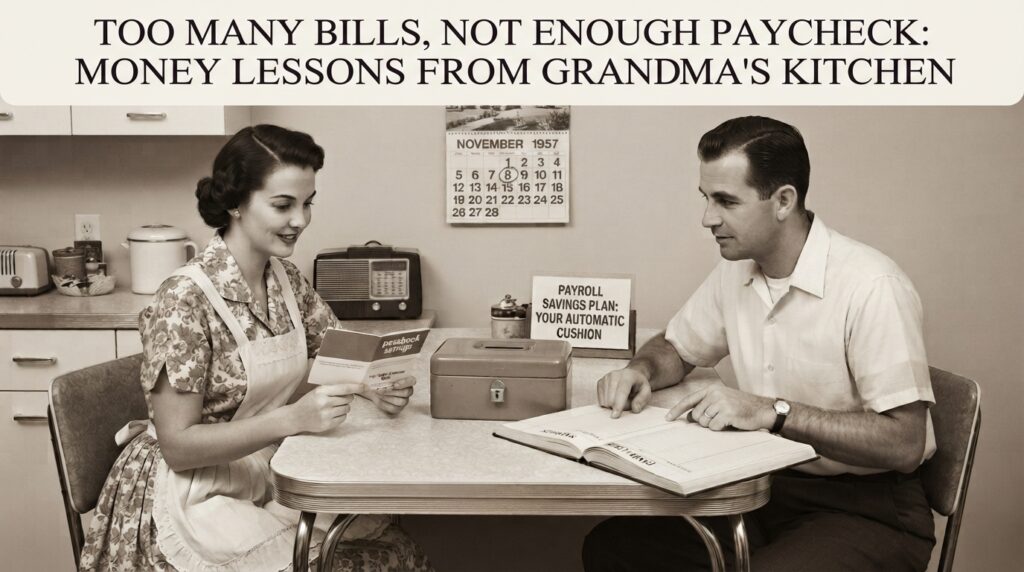
In many homes, money matters were settled at the kitchen table. Bills arrived in the mail, went into one pile and were paid in order of due date. With everything right there in front of you, nothing slipped through the cracks.
Put It All on Paper
You can’t fix a shortfall until you can see it. Sit down and list every bill you pay in a month, including the small charges that hit your card automatically: streaming services, app subscriptions, the gym membership you stopped using in March. Note the amount and due date for each one.
Next, write down what you actually take home. That means the amount that lands in your account after taxes, not your salary.
The gap between those two numbers is the real problem. Seeing it on paper can sting, but it also clears away that vague sense of dread. A number you know is far easier to deal with than a worry you can’t name.
Bring Back the Envelope System
Plenty of grandmothers kept cash in labeled envelopes for groceries, gas, the church plate and Christmas. When an envelope was empty, spending in that category stopped. It was simple, and it worked because the limit was real.
You don’t need paper envelopes anymore. Many banks let you open several free savings “buckets” and name each one. On payday, move money into each bucket. The idea is the same one Grandma used: give every dollar a job before it has a chance to wander off. It’s a good example of how personal finance has moved from checkbooks to banking apps while the core principle stayed put.
Plug the Leaks Before You Chase More Income
With your list in hand, it’s time to trim. Older generations didn’t call this budgeting. They called it not being wasteful.
Pick Up the Phone and Ask
Grandpa wouldn’t have thought twice about calling the phone company for a better rate, even if he had to do it on a rotary phone. Most of us skip that call, and we pay for it. Insurance, internet and phone providers often have cheaper plans they don’t advertise. A fifteen-minute call can save $20 to $30 a month. Do that with three bills and you could free up close to $1,000 a year.
Cook the Cheap Stuff Well
Grandma’s kitchen ran on beans, rice, eggs, soup bones and day-old bread, and the meals were good because she knew how to cook them. Planning a week of dinners around what’s on sale and cooking in batches is one of the fastest ways to shrink your grocery bill. It also cuts down on takeout, where a lot of food money quietly disappears. Save the classic snacks for special occasions rather than everyday habits.
Fix It Before You Replace It
Sewing on a button, patching a garden hose and sharpening a dull mower blade used to be everyday household skills. Before you buy something new, see whether the old one can be repaired. With free repair videos online, that’s easier than it has ever been.
Clear Out Debt Like You’d Clean a Cluttered Kitchen
Cutting expenses helps, but for many households the biggest drain is debt, especially credit cards. At today’s interest rates, a big share of every payment goes to the bank instead of the balance. Frugality alone can’t fix that part of the problem.
Know What You Owe and What It’s Costing You
List every debt with its balance, interest rate and minimum payment. You might discover you’re paying 22% on one card and 28% on another. It’s also smart to pull your credit reports, which you can get free at AnnualCreditReport.com, the site authorized by federal law. Reviewing them helps you confirm your balances and spot any accounts you didn’t open.
How Credit Card Consolidation Works
Credit card consolidation means combining several card balances into one new debt, ideally at a lower interest rate. The most common way to do it is with a personal loan. You borrow enough to pay off your cards, then make one fixed monthly payment to the lender until the loan is gone.
This helps in three practical ways:
- A lower rate. More of each payment goes toward the actual balance, so you get out of debt faster.
- One payment. A single bill is easier to track than five, so you’re less likely to miss a due date and get hit with a late fee.
- A set end date. Credit card minimums can drag on for years, but a three- or five-year loan has a finish line you can circle on the calendar.
Grandma might not have known the term, but she’d grasp the idea right away. It’s like gathering all the scattered bills into one pile with one due date. For borrowers with steady income and fair-to-good credit, a loan consolidation plan can turn a stack of high-interest cards into one predictable bill.
Don’t Restock the Cupboard
There’s one catch: consolidation only works if the cards stay paid off. If the balances creep back up, you’ll be stuck with the loan payment plus new card debt on top of it. Keep one card for emergencies, put the rest in a drawer and go back to your envelope habits. The loan clears the clutter, and your habits keep it from coming back.
Build a Cushion, Even a Small One
Older generations were good at saving something, however little. It might go into a coffee can in the pantry or a passbook savings account at the bank down the street. The habit mattered more than the amount.
Why a Few Hundred Dollars Makes a Difference
A surprise car repair or medical bill is often what tips a tight month into new debt. That’s as true today as it was when families were coaxing a ’50s sedan through one more winter. The Federal Reserve’s annual Survey of Household Economics and Decision making has consistently found that many adults would struggle to cover a modest, unexpected expense with cash. Even $500 set aside can keep a flat tire from turning into a credit card balance.
Put It on Autopilot
Set up an automatic transfer of a small amount, even $10 or $25, into savings every payday. First, though, shop around for the highest-interest savings account you can find. Online banks often pay far more than a traditional branch, so your cushion earns a little extra while it sits. You’ll miss the money less than you expect, and over a year it adds up to a real safety net.
Get Help When the Numbers Still Don’t Add Up
Sometimes the math won’t balance even after you’ve cut costs and consolidated. There’s no shame in that. It just means it’s time to bring in some help.
Call Your Creditors Early
Lenders and utility companies often have hardship programs, but you usually have to ask. Call before you miss a payment and you’ll have more options than if you wait until after.
Find Advice You Can Trust
Nonprofit credit counselors can review your budget and help you set up a repayment plan. The Consumer Financial Protection Bureau offers clear guidance on choosing a credit counselor and spotting debt relief offers that promise more than they can deliver.
The Kitchen-Table Approach Still Works
When the bills outrun the paycheck, the fix is rarely one big move. It’s a set of steady habits: knowing where every dollar goes, cutting waste, tackling debt with a clear plan and keeping a little set aside. Our grandparents built financial security with less than most of us have, mostly by paying attention and sticking with it. Their approach is as useful now as it was then, and today’s tools make it work even better.