
If you grew up in the 1950s, the family phone probably had a fixed address. Hallway table, kitchen wall, maybe a little nook by the stairs. It had a cord that was always about two feet too short, and if you wanted privacy, well, good luck with that.
Nobody carried a phone back then. You walked over to it.
Today it’s the other way around. The phone goes wherever you go, and the spot where it used to hang probably holds a calendar now, or nothing at all. Getting from there to here took about seventy years, a few wrong turns and at least one phone the size of a brick.
So, grab a coffee. This one goes from heavy black desk sets all the way to phones that fold in half.
Turning the Dial
Bell got his patent in 1876, but early on you didn’t really “call” anyone yourself. You picked up, an operator came on the line, and she plugged you through by hand. Dial phones only became common in the Bell System in the early 1920s.
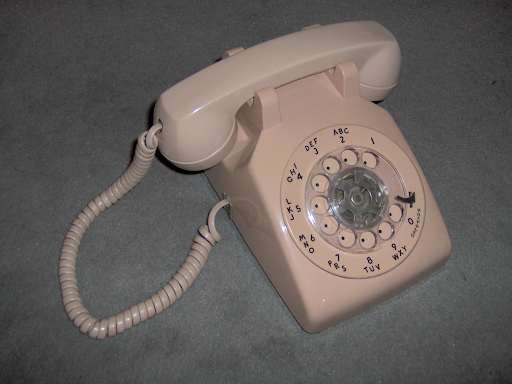
By the fifties, the rotary phone was simply part of the furniture. The one most of us picture is the Western Electric Model 500, which AT&T announced in 1949. Industrial designer Henry Dreyfuss worked on it, and you can tell. It’s chunky and rounded and pretty much impossible to break.
Dialing was slow. A number heavy on 9s and 0s could feel like it took a week. But that phone sat in the same spot for years and just worked, and it was only one of the gadgets reshaping homes at the time. Fifties Web has a fun look at the wider world of 1950s tech if you want to fall down that rabbit hole.
Wait, Phones Came in Colors?
They did, though not right away. The first Model 500s were black, full stop. From 1954, Western Electric offered ivory, red, green, yellow and blue, and later on pink and aqua showed up too.
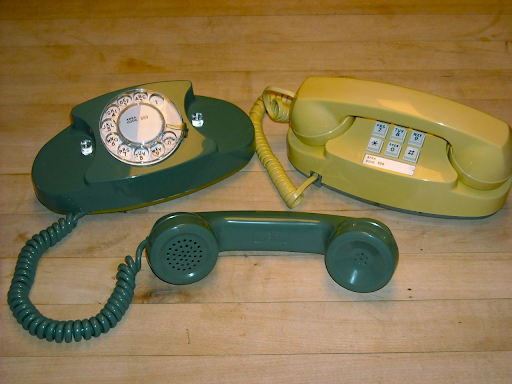
Then 1959 brought the Princess phone. Smaller, softer, made for the bedroom, with a dial that glowed so you could find it at night. AT&T’s ads said it all: “It’s little. It’s lovely. It lights.” People picked it because it was pretty. Imagine that.
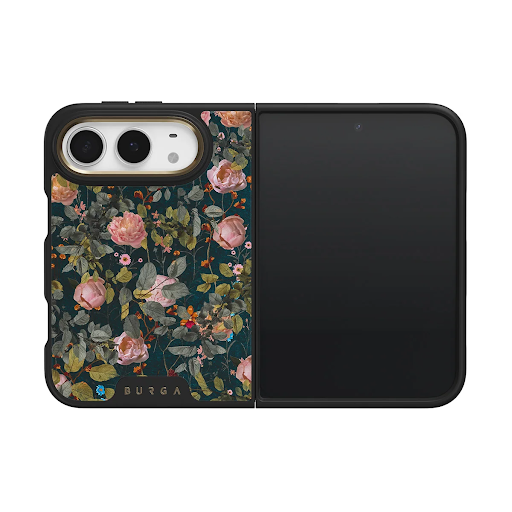
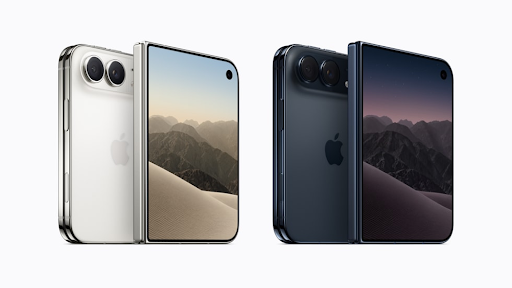
Honestly, that instinct never left. The iPhone Duo comes in just two colors, star white and night sky, so owners are doing exactly what their grandparents did and picking the look themselves. Design brands like BURGA make iPhone Duo cases in more than 500 original prints, all as slim two-part BURGA Elite cases that fold with the phone. Some of them lean straight into nostalgia, like BURGA Bloomy Garden, a vintage floral print that would have looked right at home next to a pink Princess phone, just about seventy years later.
Beep, Boop, Touch-Tone
November 1963 is when Touch-Tone service arrived in the Bell System. No more waiting for the dial to whir back around after every number. You just pressed buttons and got those cheerful little tones. A few years later, in 1968, the Model 2500 added the star and pound keys. So yes, every time a phone menu tells you to “press pound,” you can thank the late sixties.
The Brick
Up until the eighties, a phone and a wall were basically a package deal. Then Motorola’s DynaTAC 8000X got the green light for public use in the U.S. in 1983 and went on sale properly the next year.
People called it “the brick,” and that was being kind. About 2.5 pounds. Roughly half an hour of talk time. Something like ten hours on the charger. And a price tag of $3,995 in 1984 money. It was less a phone than a very loud announcement that you had cash to burn.
Small, Flippy and Fun
The nineties shrank everything. Motorola’s StarTAC landed in 1996, weighed about 88 grams, and folded shut with that click everybody loved. Snapping a flip phone closed was the original way to end an argument.
Then the Nokia 3310 showed up in 2000 and went on to sell around 126 million units. Battery for days, Snake II on tap, and a reputation for surviving pretty much anything. Mention it to anyone over thirty and watch them get misty.
This was also when phones turned back into accessories. Swap-on covers, polyphonic ringtones, little dangly charms. Not that different from choosing a pink desk phone in 1957, really.
Everything Becomes a Rectangle
2007, the iPhone. Keypads basically vanished, and for the next decade-plus, nearly every phone became a flat slab of glass.
Phones swallowed our cameras, maps, music, wallets and TV. The catch? They all started to look alike. One black rectangle is hard to tell from the next, and that’s a big part of why cases became how most people make a phone feel like theirs.
And Now It Folds Again
Here’s the twist. Foldable phones started showing up from Android brands around 2019, and this year Apple made its own move with the iPhone Duo. Closed, it’s a 5.4-inch phone. Open, it’s a 7.6-inch screen. Starting price: $1,999.
We spent years getting rid of flip phones, and one of the priciest phones ever made now snaps shut just like a StarTAC did. Fashion always comes back around. Apparently, tech does too.
Some Things Never Change
Strip away the screens and hinges and it’s the same wish list it always was. Reach the people you care about. Have it work when you need it. And, ever since 1954 at least, have it look nice.
Someone from 1955 would probably be stunned by the iPhone Duo. Give them a minute, though, and they’d likely ask whether it comes in pink.