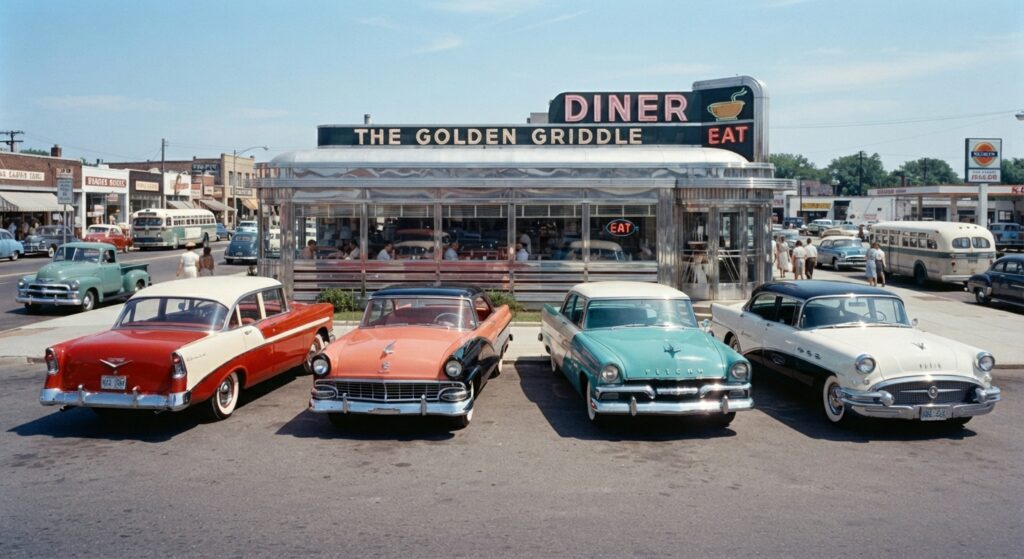
If you walked onto a new-car lot in 1955 or 1956, you were looking at the boldest color gamble Detroit ever took. Just a few years earlier, post-war American streets were dominated by black, navy, charcoal, and muddy maroon—holdovers from wartime austerity and conservative tastes. Then General Motors, Ford, and Chrysler threw open the paint locker, pairing Jet Age chrome trim with pastel turquoise, coral-pink, mint green, and ivory white—a look that turned 1950s classic cars into rolling icons at every local drive-in.
Today, restoration hobbyists and classic car buyers spend big money chasing down those exact factory shades. What’s fascinating, though, is how dramatically tastes have flipped over the last seventy years. Colors that were cautious, bread-and-butter sellers in 1956 often get stripped down in modern restoration shops, while the loud, risky two-tones that made conservative buyers hesitate back then are now the blue-chip head-turners at every cruise-in and collector auction.
Below is a marque-by-marque breakdown of the most famous 1950s factory paint codes—comparing what actually sold on showroom floors yesteryear against what commands top dollar today, complete with OEM cowl-tag codes, Ditzler (PPG) formulas, and archival references.
How to Read 1950s Paint Codes
Before diving into the charts, it helps to know how Detroit stamped color onto a car:
-
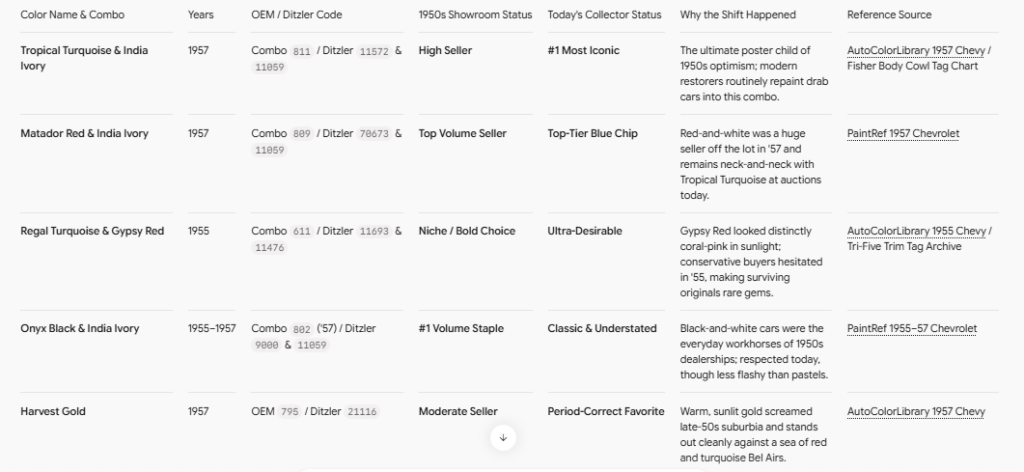
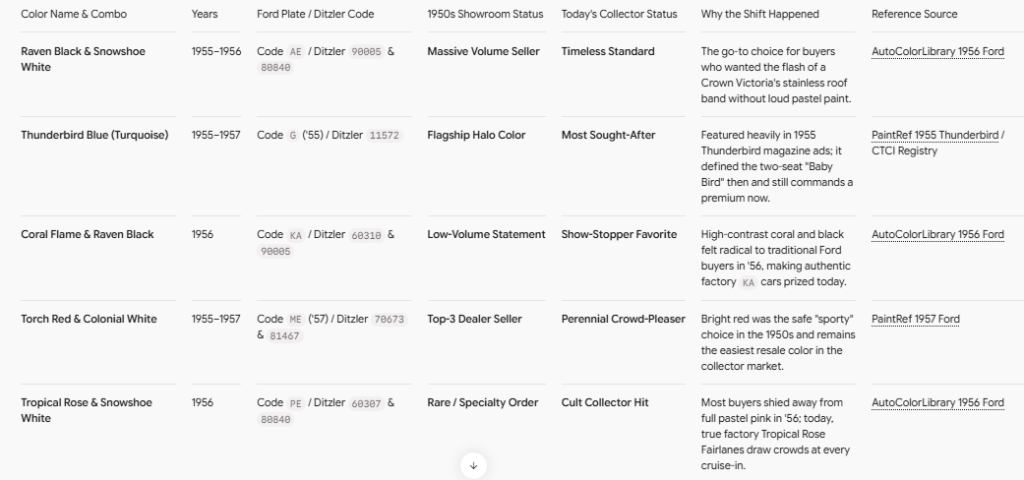
OEM / Trim Tag Codes: General Motors stamped a three-digit combination code onto the firewall cowl tag (for example, 811 on a ’57 Chevy indicated a specific two-tone pairing), while Ford stamped single or double letter codes directly onto the patent data plate.
-
Ditzler (PPG) & DuPont Numbers: Paint shops and restorers rely on aftermarket cross-reference numbers—most notably Ditzler (PPG) lacquer/enamel codes—to mix period-accurate formulas today.
Chevrolet (1955–1957 “Tri-Five” Era)
Chevy’s 1955–1957 lineup set the gold standard for two-tone styling. Thanks to Harley Earl’s design studio, sweeping stainless-steel side moldings gave factory painters crisp borders to split roofs, rear quarter panels, and lower bodies into contrasting shades. While black-and-white “tuxedo” cars moved in huge numbers off dealership lots, the pastel two-tones became the undisputed icons of the era.
Ford Motor Company (1955–1957 Fairlane & Thunderbird)
Ford answered Chevy’s two-tone surge with some of the sharpest side-trim breakups in the business—especially the 1955–1956 Fairlane Crown Victoria, which featured a stainless-steel “tiara” band arcing straight over the roof. Everyday family buyers leaned heavily toward Raven Black and Torch Red, leaving bold coral and rose combinations as low-volume dealer showpieces that collectors hunt relentlessly today.
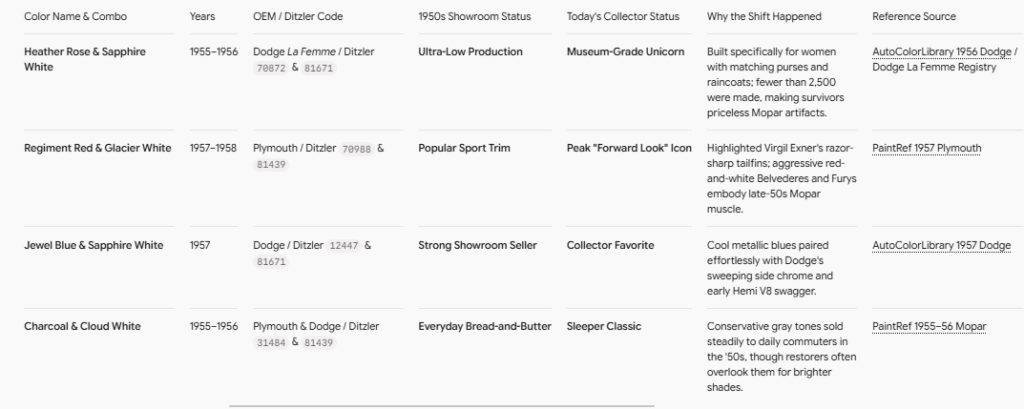
Chrysler Corporation (Plymouth, Dodge, DeSoto)
When stylist Virgil Exner unleashed Chrysler’s “Forward Look” in 1955 and 1957, Plymouth, Dodge, and DeSoto went from boxy and conservative to low, finned, and futuristic overnight. Mopar’s sweeping “Swept-Wing” trim demanded dramatic color splits—including Dodge’s audacious La Femme edition, one of the rarest factory color packages ever built.
Cadillac (1957–1959 Luxury & Tailfin Era)
While Chevy and Ford fought over bright pastel two-tones, Cadillac played a slightly different game. Luxury buyers in the late 1950s favored rich metallic (“Polychromatic”) lacquers and crisp formal whites—until Elvis Presley custom-sprayed his 1955 Fleetwood in pink and accidentally created the most famous car color in pop culture history.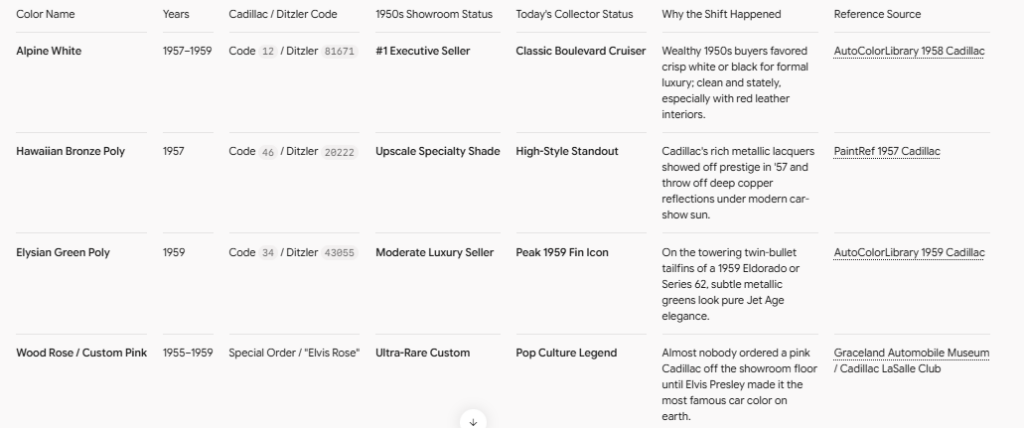
Verifying Original Paint on a 1950s Classic
If you are inspecting a 1950s classic at a swap meet or verifying whether a Bel Air or Fairlane still wears its factory color combination, never rely on memory alone. Check the stamped metal cowl tag (usually riveted to the upper firewall under the hood on GM and Mopar cars, or on the driver-side door jamb/glovebox on Fords) and cross-check those numbers against original Ditzler/PPG chip charts at AutoColorLibrary or PaintRef. A matching paint code doesn’t just prove originality—it tells the story of how bold the original owner was willing to be back in 1950s pop culture when these machines ruled the boulevard.