
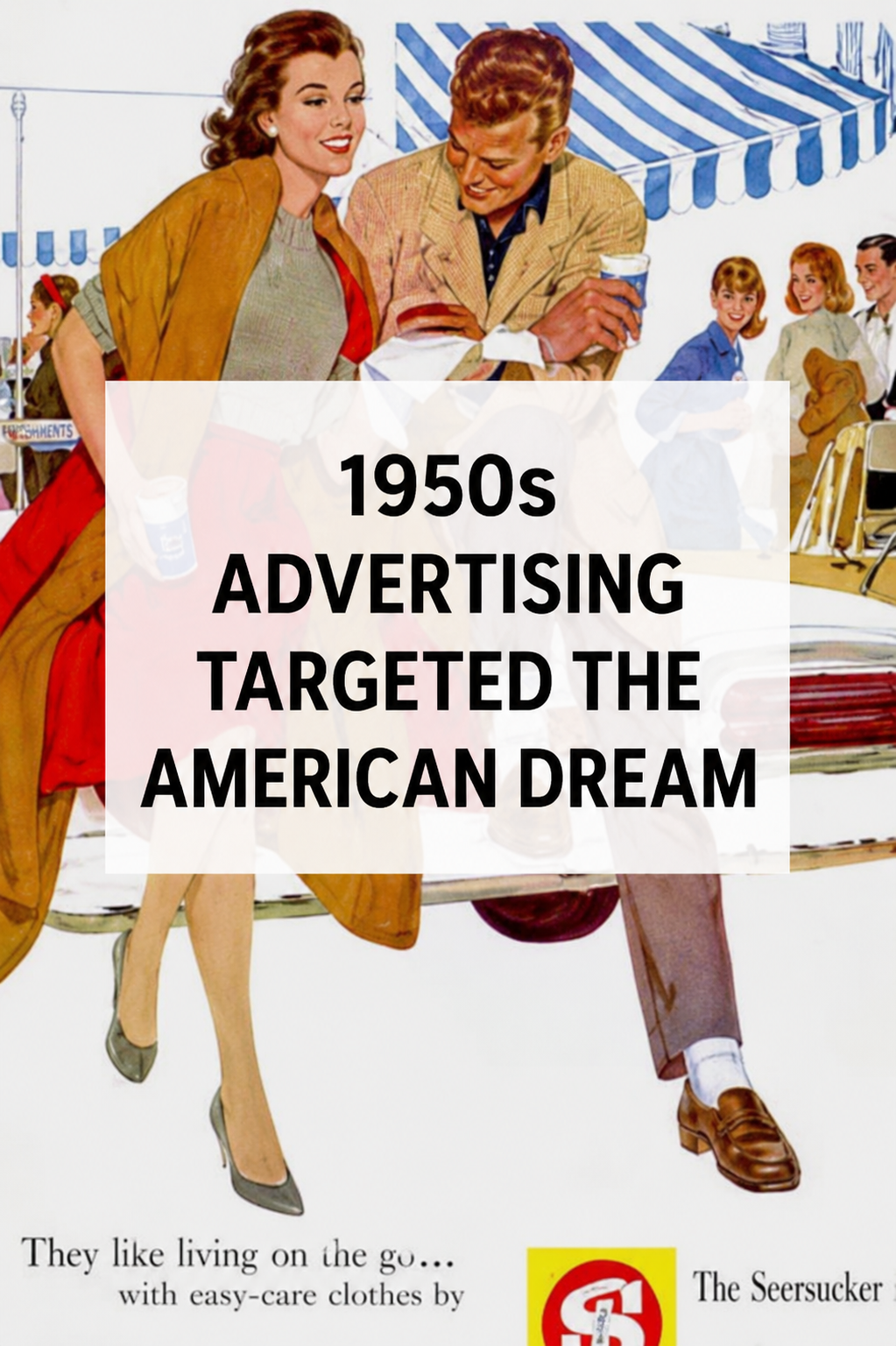
You could say the 1950s were a decade of good times. In the wake of the Great Depression and the war, many Americans set their sights on putting down roots and building lives of some comfort and modern ease. The business world saw this and made the most of it. With TV, radio, and billboards, they didn’t just put out ads for wares; they put the American Dream on sale.
They knew what was in people’s heads: a good house, a car you can count on, some new-fangled appliances, well-behaved kids, and a secure bank account. The ad’s message was that if you made the right purchase, you were one step closer to that ideal.
What the American Dream Meant in the 1950s
For the most part, it was about having a home, a stable income, and a solid family unit.
Postwar Optimism
Once the war was over, the economy picked up in a hurry. You had the baby boom, with more and more families heading to the suburbs to put up a home and have a few kids.
They were after a better way of living than their parents had, and advertisers latched onto that kind of hope.
Symbols of Success in the 1950s
Success had its trappings:
- A place in the suburbs
- A new car in the driveway
- All the latest in kitchen gadgets
- A contented family
- The means to live well
The Rise of Television Advertising
Television was where things really changed.
By the mid-’50s, you couldn’t walk into a home without seeing a set in the living room. It was a whole new ballgame for marketers. Now they could make a commercial and have it in front of a family at the end of the day.
Whether it was for a sedan, a pack of smokes, or a box of cereal, TV let a brand make an emotional pitch in a way a magazine page never could.
Advertising Targeted Housewives
And they made sure to aim for the housewife.
A lot of the ads of the time were put together with her in mind. You’d see a beaming woman in the kitchen with a new appliance, and the subtext was clear: this is how you make life with the family a little smoother.
Popular Household Products Advertised
We’re talking:
- Washing machines
- Ovens
- Mixers
- Kitchen appliances
- Household tools
The promise was less work, more time to run a proper home.
Cars Became Symbols of Success
With the suburbs spreading out, you needed wheels. Car makers were all over this, making a point of selling not just a vehicle but a certain kind of freedom and status.
A nice car with some chrome on it was a sign you had made it.
Advertising to Children
Even the little ones were fair game. The baby boom meant there was a market of kids to be had. Advertisers figured if they could win over the child, they could move product.
Popular Products Marketed to Kids
So you started to see them in comic books and on TV with jingles and mascots for:
- Toys
- Candy
- Bikes
- Cereals
- Comic books
Gender Roles in 1950s Advertising
It was a time of very defined roles. In an ad, the man was the one who put food on the table. The woman was the one in the apron, making sure the house was in order and the husband was happy.
It was a tidy picture of normalcy, if not always the full story of how a family actually got by.
Celebrity Endorsements
Celebrities were in on it, too. You had your share of Hollywood and TV types vouching for everything from cosmetics to tobacco. It made a product feel a bit more like something you aspired to.
The Visual Style of 1950s Advertising
There was a certain look to it all.
The Classic Look of 1950s Ads
You’d often see:
- Pastel tones
- A spotless kitchen
- A well-dressed kid
- A smiling family
- Bright and polished designs
It was all very put-together.
Catchy Slogans and Jingles
And with a good slogan or a jingle you couldn’t get out of your head, they made sure you remembered it.
The Lasting Influence of 1950s Advertising
If you look at the way we do things now, you can still see the hand of the 1950s. The storytelling, the use of a famous face, the idea that a purchase can make you happier — it’s all there.
There’s a reason a vintage ad from that era can still make you feel a twinge of nostalgia. It was more than just a way to sell something; it was a mirror for a generation that was done with hard times and ready to build.