
Popular 1950s Soda Shop Culture and Social Hangouts
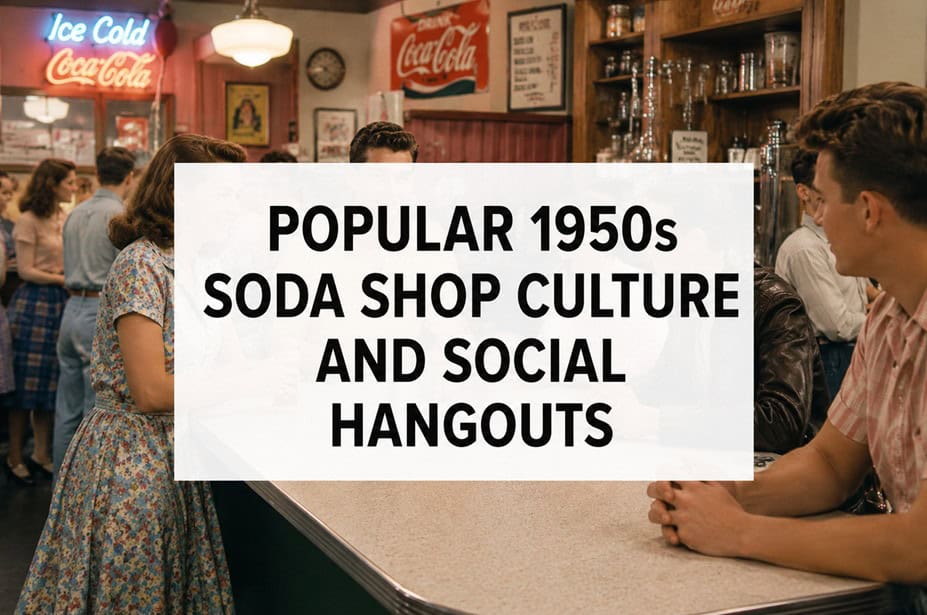
In the 1950s, you could see a new kind of teen culture taking shape. It was in the music, the way they dressed, the cars they drove, and where they made a point to be. But if there was one spot that defined the era, it was the soda shop.
You’d find them in every town in America, and for good reason. They were the place to be if you wanted to put your feet up, have a word with some friends, and let the hours pass over a burger, some fries, and a milkshake.
Before we had our phones or the internet, this is where you made a connection face-to-face. A 1950s soda shop was full of life and had an open, easygoing vibe. You could come in after a day at school or make it a Saturday night tradition; either way, it was the decade’s go-to for a social outing.
The Appeal of the 1950s Soda Shop
There was a lot to it. For one, the post-war economy was on an upswing. Suburbs were growing, and families had a little more in their pockets. That meant teenagers had a bit more leeway and more options than any generation before them.
Soda shops offered a no-fuss, budget-friendly way for young people to be together. And for the most part, parents didn’t mind. These were public, well-lit places with adults around to keep an eye on things. But for the teens, it was about having a little space to themselves, away from home.
They were usually within walking distance of a high school, a theater, or the heart of downtown. So after practice or a weekend plan, you could just head in, put in an order, and make yourself at home.
A Place of Its Own
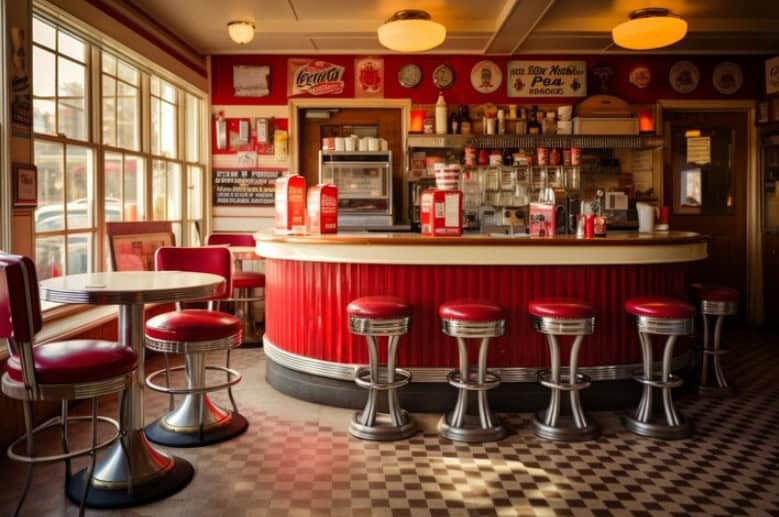
Step inside and you were in a world of its own. There was the long counter with its row of stools, the checkered tile underfoot, the chrome, and the neon in the window.
The Jukebox Experience
Then there was the jukebox. You put in a quarter, and you had the room to yourself with your favorite tune. Rock and roll was in the air, and it didn’t let up.
The Atmosphere Inside
It was a comfortable scene. The waitresses in their uniforms, the array of syrups and ice cream on display, and the aroma of the kitchen all added to the feeling of being in a good spot. Some even ran late into the evening, which made them a hit after a game or a dance.
What Was on the Menu
You can’t talk about these places without the food. It was the kind of simple, unpretentious fare that was good for the wallet and for sharing.
Popular Soda Shop Favorites
You had your staples:
- Milkshakes and sundaes
- Root beer floats
- Cheeseburgers and hot dogs
- Fries
- A cherry cola or two
- The occasional banana split
The Famous Milkshakes and Soda Jerks
Milkshakes were something of a legend by then. Sure, you could have a plain chocolate or vanilla, but a lot of fountains would put their own spin on things.
And don’t forget the “soda jerks” working the line. They were as much a part of the show as the customers, churning out orders and making small talk with a smile.
Rock and Roll
With rock and roll on the rise, the soda shop was where you went to hear the latest and greatest with your crowd.
You could count on the jukebox to be ruled by the likes of Elvis, Chuck Berry, Buddy Holly and Little Richard. You’d find a crowd of teens around them, some with a dance in their step, others just there to have a laugh or put in a few verses.
In a way, soda shops were the epicenter for young people. They put music, style and socializing under one roof. A lot of teenagers would put in an extra effort with their clothes before heading to their spot of choice, if only to make an impression on a friend or a date.
Some of the older generation had a hard time with rock and roll, but that was part of its charm to a teen. In a soda shop, you were in your own world.
Soda Shops as the Place to Be
Back in the 50s, before malls came into vogue, the soda shop was where you went to be. It was more of a social club than a place to put in an order.
After a day at school, you’d drop in to talk about what was going on with the team, or who was with whom, or what you were up to for the weekend. You had your couples on a low-key date and then the bigger cliques in the booths for the long haul.
There was also something about it that made you feel a little older. No parents in the room, you call the shots on the food and the jukebox. It was where a lot of the decade’s teenage identity was formed, and where no small number of romances and lifelong friendships got off the ground.
A Matter of Style
Then there was the fashion. In a 1950s soda shop, you couldn’t miss it. It was like a stage of sorts.
Fashion Trends for Girls
The girls were in poodle skirts and cardigans, with a saddle shoe on their foot and a scarf in their ponytail; a pop of red lipstick and some cat-eyes and you were set.
Fashion Trends for Boys
The guys were in their T-shirts and cuffed jeans, or maybe a letterman sweater and a leather jacket. A pompadour or some hair combed back in the style of a movie star was de rigueur.
Hollywood put a lot of that in motion. You saw it on the screen and in the mags, and you wanted to be part of it. So when you hit the soda shop, it wasn’t just for a shake or a tune. It was to be seen.
What the Screen Sold
Television and movies did a lot to put the 50s soda shop on the map. If you were watching a teen film, you were sure to see a scene at the diner after school.
It sold the idea of a good time: all the noise, the energy, the fun. TV shows put the same picture in front of you. And as more and more families in America put in a set, those trends caught on in a hurry.
What Remains
If you walk into a retro diner these days, you can still see the 50s in the chrome and the old menus. Pop culture is still fond of the soda shop because it harkens back to a time that was a bit more carefree.
For anyone from that era, it was where life as a teenager happened. The whole vibe of the place – the tunes, the look of it – is what put a stamp on a generation.