
Most people agree that an emergency fund is a good idea. Far fewer have one they could rely on tomorrow. The problem usually isn’t a lack of knowledge. It’s that money has become hard to see. Paychecks arrive as numbers on a screen, bills pay themselves and spending takes a single tap. Saving, on the other hand, takes a decision, and decisions are easy to put off.
Earlier generations had less income to spare and far fewer financial products, yet many households still managed to build a cushion. They did it through routine rather than willpower, using plain, physical methods they repeated week after week. Those habits still have something to teach us: the tools have changed, but the behavior that makes saving stick hasn’t.
Why the Old Habits Worked
Fifties households didn’t save because people were more virtuous back then. They saved because their systems made saving the default and made spending the thing that took effort.
That lesson matters today. Each year, the Federal Reserve asks American adults how they would cover a surprise $400 expense, and a sizable share say they would need to borrow, sell something or go without. Four hundred dollars is a flat tire or a trip to the vet. It shouldn’t be a crisis, and the habits below are about making sure it isn’t.
Money You Could See
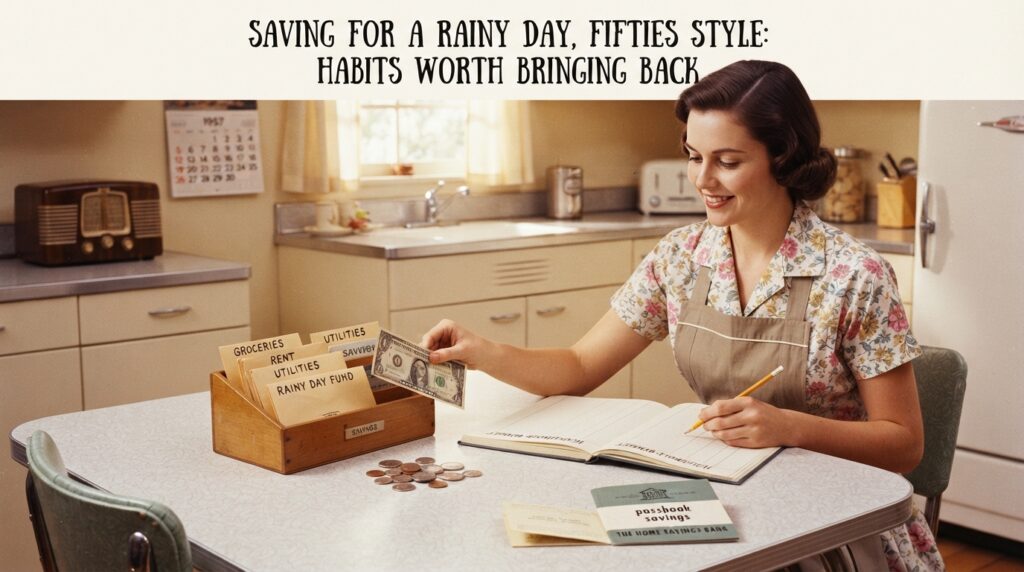
Cash has weight. When a family kept its grocery money in a kitchen tin, everyone could watch the tin empty as the week went on. That simple visual did the job budgeting apps try to do now, no notifications required. People spent more carefully because the limit was right in front of them, and with prices in the 1950s for staples like milk and bread, every coin in that tin had a clear purpose.
Saving Came First
Many families set their savings aside the day the paycheck arrived, before rent, before groceries, before anything else. Whatever was left was what they lived on. It sounds simple, but it reverses the common modern habit of saving whatever happens to remain at the end of the month, which is usually nothing.
Habits Worth Bringing Back
Those two ideas, visible money and saving first, run through nearly every money habit of the era. Several of them translate easily to the present.
The Envelope System
The classic method was a set of labeled envelopes: one for groceries, one for gas, one for the electric bill and one for a rainy day. Cash went in on payday, and when an envelope was empty, spending in that category stopped.
You don’t need real envelopes to borrow the idea. Many banks let you divide one savings account into named buckets, or you can open a few separate accounts. The goal is to give every dollar a job before you spend it and to make the rainy-day job impossible to overlook.
The Christmas Club Mindset
Christmas clubs were savings accounts that took a small, fixed deposit every week for the whole year. In November, members received a check for the holidays. That meant no big credit card bill in January and no last-minute scramble.
The same approach works for any expense you know is coming but tend to forget, such as car registration, school supplies or an annual insurance premium. Financial planners now call these “sinking funds.” In the fifties, it was simply called planning ahead. Divide the yearly cost by 52, set that amount aside each week and the expense stops being a surprise.
Payroll Savings, Then and Now
In the postwar years, millions of workers bought U.S. savings bonds through payroll deductions. A few dollars came out of each check automatically, and over time those bonds added up. Because the money never reached their pay envelope, workers rarely missed it.
Automatic transfers do the same job today. Schedule one to move a fixed amount from checking to savings the day after payday. Start small if you need to. Ten dollars a week that moves every single week beats a hundred dollars you plan to save someday.
Make Do Before You Buy
Fifties households mended clothes, darned socks, saved jars and kept a well-stocked pantry. Much of this came from necessity, but it also meant fewer small emergencies. A torn shirt was an evening’s work, not a shopping trip, and a pantry with a few weeks of staples kept a tight month from becoming a hungry one.
Not everyone wants to learn to sew. Still, asking “Can I fix this or use what I already have?” before buying something new cuts spending in a way no budget can match. Every purchase you skip is money your rainy-day fund gets to keep.
Where Modern Banking Fits In
Old habits take care of the behavior side of saving. Modern banking can take care of the growth side, and that’s one area where today’s savers have a real advantage over their grandparents. For a closer look at how much has changed, see From Checkbooks to Banking Apps: How Personal Finance Changed Over the Decades.
How High-Yield Savings Accounts Work
In the fifties, the family rainy-day fund often lived in a passbook savings account at the local bank. A teller stamped each deposit into a small booklet, and the money earned modest interest. A high-yield savings account is the modern version of that passbook, with a better return.
These accounts work much like ordinary savings accounts. You deposit money, it earns interest and you can withdraw it when you need it. The difference is the rate. Many high-yield accounts, often from online banks with lower overhead, pay an annual percentage yield several times higher than a standard savings account at a large branch bank. Interest usually compounds daily or monthly, so your earnings start earning too.
Two details are worth knowing. First, the rates are variable, so they can rise or fall over time, often in step with broader interest rate changes. Second, the money stays accessible. That makes these accounts a good home for emergency savings, since you want the cash ready on short notice rather than locked away.
Choosing an Account Without Overthinking It
Comparison sites make it easy to find the highest interest rate savings account at any given moment, but rates change, so treat the top number as just one factor. Also look at minimum balance requirements, monthly fees and how quickly transfers reach your checking account.
Make sure the bank carries federal deposit insurance, too. According to the FDIC, deposit insurance covers $250,000 per depositor, per insured bank, for each ownership category, which is more than enough for most emergency funds.
One more benefit is easy to miss. Keeping your savings at a different bank from your checking account adds a little friction. The money is within reach, but not so close that you’ll dip into it for a weekend splurge. That small barrier does the same job the locked cash box did decades ago.
Putting the Pieces Together
The strongest approach blends the best of both eras: fifties discipline paired with modern tools. Here’s what that looks like in practice.
Start With a Small, Specific Goal
“Save more” is a wish. “Save $500 by March” is a plan. Choose a first target you can reach within a few months, because an early win helps the habit take hold. Once you reach it, raise your goal to one month of essential expenses, then three.
Keep a Ledger
Families once tracked every dollar in a lined notebook tucked in a kitchen drawer. Writing things down makes you notice where your money goes. A notebook still works, and so does a simple spreadsheet. Spend five minutes each Sunday recording what came in, what went out and what went into savings. Within a month, you’ll start to see patterns you never noticed before.
Review It Each Season
Fifties homemakers often reworked the household budget as the seasons changed, since heating bills, school costs and holiday spending came and went. A quarterly check-in does the same thing today. Adjust your transfers, top up any sinking funds that ran low and make sure your emergency fund still matches your current expenses.
A Steadier Way to Save
The habits that kept fifties households afloat weren’t clever. They were consistent. Money was visible, saving came first and spending took more effort than setting cash aside. Those principles still work, and modern accounts can help your money grow while it waits. No single step builds a rainy-day fund. Steady routines do, and when the next unexpected bill arrives, a cushion built that way turns it into just another ordinary week.