
Food has a way of anchoring our memories. But it isn’t just what is on our plates that matters—it’s the way we feel as we gather around them. Let’s walk down memory lane and see how the humble Sunday dinner has transformed over three incredible decades, and what it looks like for families today. Welcome to The Ageless Table!
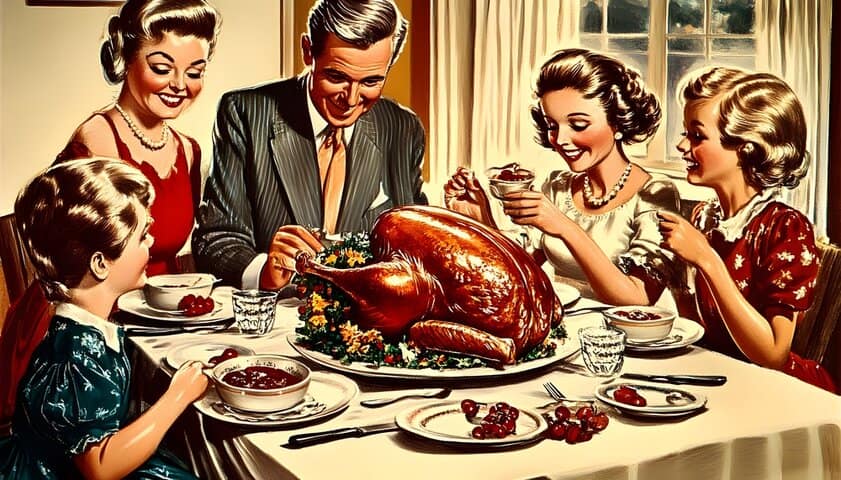
The 1950s: The Era of Sunday Best
Back in the fifties, Sunday dinner was practically a holy event. You came home from church, took off your good shoes, and immediately smelled the pot roast that had been slow-cooking since morning.
The dining room table was set with real cloth napkins, the good china, and milk that had been dropped off in glass bottles right on the front porch by the milkman. Table manners were non-negotiable. You kept your elbows off the table, passed the gravy boat to the left, and waited until everyone was served before taking a single bite.
1950s Sunday Menu Essentials:
- Chuck roast with potatoes and carrots, cooked to absolute tenderness
- Wonder Bread with a tub of real butter
- Iceberg lettuce wedge with a heavy dollop of Thousand Island dressing
- Canned peaches served in tiny crystal dessert bowls
There were no pinging cell phones or blaring TVs in the background. It was just good food, stiff collars, and catching up on neighborhood news. Pure, simple, and neat as a pin.
The 1960s: Things Get a Little Groovy
By the time the mid-sixties rolled around, the strict formality of the dining room started to soften up. Kitchens were turning bright colors, record players were spinning the Beatles or Motown in the living room, and convenience foods were taking the country by storm.
Suddenly, Sunday dinner didn’t take four hours to prep. Mom was experimenting with Campbell’s cream of mushroom soup, top-rated casseroles showered in crunchy French’s fried onions, and of course, the crown jewel of every mid-century potluck: the Jell-O mold. If it was green, held sliced fruit mid-air, and sat on a bed of lettuce, it was downright keen.
Kids found their voice and “Can we watch The Ed Sullivan Show while we eat?” became the weekly plea. Folding TV trays made their grand entrance, and bit by bit, the TV set began pull us into the living room.
The 1970s: The Crock-Pot Revolution
Ah, the seventies. Wood-paneled walls, harvest gold appliances, avocado green vinyl tablecloths, and a whole new level of laid-back living.
With more moms entering the workforce and kids juggling Little League and guitar lessons, Sunday dinner became far more relaxed. Enter the Crock-Pot. You could dump in your ingredients, head out for the day, and come back to a house smelling like heaven. Fondue parties were all the rage, and eating dinner in the living room on a shag carpet was no longer a crime—it was far out.
1970s Dinner Table Staples:
- Beef Stroganoff over egg noodles
- Cheese fondue with cubed French bread
- Hamburger Helper on busy evenings
- Tang or Kool-Aid served in colorful aluminum tumblers
The dinner hour was looser, louder, and a lot more casual, but the table remained the anchor point of the house.
Fast Forward to Today: The Digital Dinner Table
Today’s Sunday night might look like organized chaos, but look past the surface. Yes, the roast is replaced by takeout containers, and group chats coordinate the chaos between work and practice. But as tablets get set aside and everyone gathers around the kitchen island to grab a slice, that familiar warmth kicks in. We may be moving at lightning speed, but we’re still choosing to slow down and break bread together—and that’s what really counts.
Times change, menus evolve, and appliances get sleeker—but passing the plate and sharing our lives with the people we love will always be on trend! But as they say, what goes around comes around. There are some incredible tips out there to help bring Grandma’s timeless skills right into the modern kitchen.