
Closets are shrinking, budgets are tightening, and the calendar is as packed as ever. Against that backdrop, a quiet shift has taken hold in how women shop for clothes. Instead of chasing a different outfit for every event, more shoppers are searching for one dress that can move from a birthday dinner to a client meeting to a weekend wedding without missing a beat.
This is not a trend confined to fast fashion racks or thrift finds. It is showing up in how brands design, market, and price their collections, and it is reshaping what “getting dressed up” actually means.
Why Versatility Has Become a Non-Negotiable in Modern Wardrobes
The single-occasion dress, the one worn once and photographed for an event that never repeats, is losing its grip on the modern wardrobe. Shoppers are increasingly vocal about wanting pieces that earn their keep over the course of a season rather than a single evening. This is partly financial. Spending a significant amount on something worn once no longer sits well with many consumers, especially younger ones who came of age watching resale markets and capsule wardrobes gain popularity.
It is also cultural. Social calendars now blend professional and personal events more than they once did, with work happy hours, milestone birthdays, and family celebrations often falling in the same week. A dress that can shift context, styled up with statement jewelry for one event and pared down with flats for another, has become genuinely practical rather than aspirational.
Multi-Occasion Dresses as a Style Category
Retail data and runway coverage alike point to the same pattern: dresses built for range are outperforming those built for a single moment. Designers are responding with silhouettes that read as elevated without tipping into costume territory, and fabrics chosen for how they move rather than how they photograph in a single pose.
Legendary Hollywood costume designer Edith Head once said, “You can have anything you want in life if you dress for it.” That idea carries different weight today than it did decades ago. Dressing for a life that is not neatly divided into categories- work, celebration, travel- means fewer wardrobe boundaries and more pieces expected to do double or triple duty.
This has pushed brands to think of a dress less as an occasion-specific costume and more as a tool a woman reaches for repeatedly. A well-cut dress in a versatile silhouette can anchor a capsule wardrobe the same way a good blazer or a reliable pair of trousers might, giving shoppers fewer decisions to make and more confidence in the outcome.
How Ellaé Lisqué Is Meeting the Demand for Wearable Luxury
Ellaé Lisqué, a Los Angeles-based fashion label founded in 2015 by Maxie J, has built its business around this exact shift. The brand, which marked its tenth anniversary in 2025, designs and manufactures its own styles in-house, giving it direct control over fit, fabric, and finish rather than relying on third-party production lines.
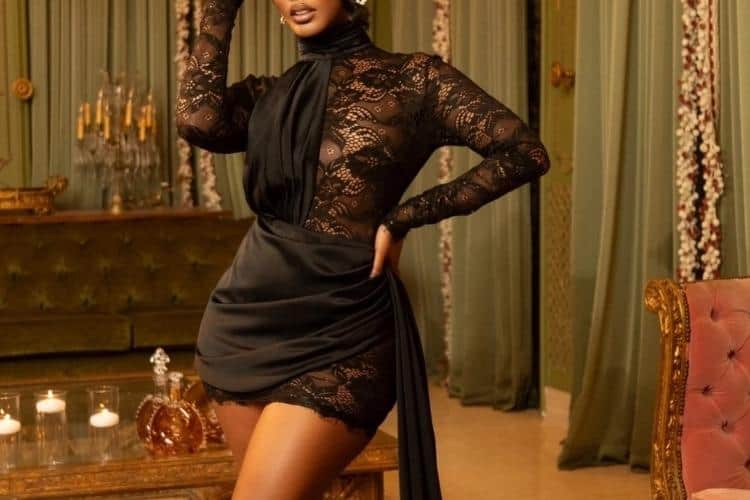
The company’s core customer sits in a specific lane: women who want a luxury look without luxury-house pricing, often shopping for birthday dresses, date night pieces, or going-out wear that can also flex into more polished settings. Among its offerings, a black lace corset dress illustrates the approach well.
The structured corset silhouette provides definition and shape, while the lace detailing adds an evening-appropriate edge that can be dressed down with a blazer for daytime settings or dressed up with heels for a night out.
Ellaé Lisqué has built visibility well beyond its home market. The brand has been covered by Forbes, Essence, and Yahoo Life, and founder Maxie J appeared on the cover of Grind Pretty magazine. Its pieces have also appeared on television, worn by cast members of The Real Housewives of Beverly Hills and The Real Housewives of Atlanta. Manufacturing takes place primarily at the brand’s own facility in Turkey, with additional production in China. The company currently ships internationally and is working on a formal expansion into the United Kingdom market.
Fabric, Fit, and Function: What Makes a Dress Truly Transitional
Not every dress can bridge multiple settings, and the difference usually comes down to a handful of design decisions. Structured fabrics that hold their shape tend to translate better across contexts than delicate materials that only work under controlled conditions. Necklines and hemlines that sit in a middle ground, not overly conservative, not overly revealing, give the wearer more styling options with accessories and layering pieces.
Cut is another factor. Dresses designed with curves and fuller figures in mind, rather than a single standard sizing block, tend to perform better across a broader customer base and a wider range of settings. This inclusivity is not a minor detail. It often determines whether a dress functions as a genuine wardrobe staple or a niche purchase suited only to one body type and one event.
The Cultural Shift Toward Dressing for Confidence, Not Just Occasion
Underneath the practical arguments for versatility sits a more personal one. Clothing has long served as a form of self-expression, and the current preference for adaptable dressing suggests women want that expression to accompany them rather than be reserved for special nights.
Coco Chanel’s observation that “in order to be irreplaceable, one must always be different” speaks directly to this. A dress that adapts to its wearer’s life, instead of demanding the wearer adapt to it, allows for a more consistent sense of personal style across very different settings.
That consistency, more than any single trend cycle, appears to be driving the current appetite for dresses built to work beyond a single occasion. As shopping habits continue to prioritize cost-per-wear and personal versatility over one-time statement pieces, the dresses gaining traction are the ones that can be reworn, restyled, and reintroduced into a wardrobe again and again, rather than retired after a single appearance.