
Las Vegas had casinos long before the 1950s, but the postwar decades transformed the city into something much bigger. Gambling remained part of the attraction, yet visitors increasingly came for glamorous hotels, elaborate showrooms, famous musicians, late-night dining and the feeling that almost anything could happen after dark.
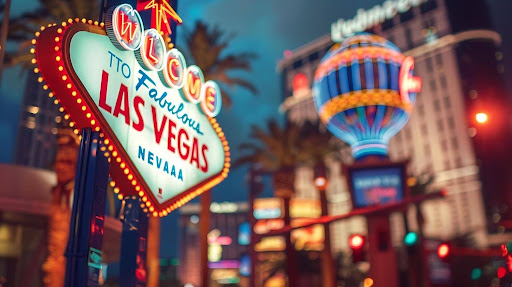
By the 1960s, Las Vegas had developed an identity recognized far beyond Nevada. Frank Sinatra and the Rat Pack were part of its mythology, neon signs defined its nighttime skyline, and Hollywood helped turn the Strip into a symbol of American glamour. Much of the Las Vegas people picture today was shaped during those two remarkable decades.
The Strip Begins to Take Shape
Las Vegas expanded rapidly after World War II, and a new generation of resorts began changing the desert landscape. The Desert Inn opened in 1950, followed by properties including the Sahara and Sands in 1952. Rather than functioning simply as places to gamble, these resorts combined accommodation, restaurants, swimming pools, entertainment and casino floors.
Their architecture was designed to attract attention. Roadside signs became taller and brighter, while themed buildings competed for the eyes of motorists traveling along the Strip. At night, neon turned the road into a spectacle of its own.
The resorts were also selling an atmosphere. Guests could spend an entire evening inside one property, moving between dinner, a show and the casino without needing to go elsewhere.
The Showroom Became Almost as Important as the Casino
Entertainment helped distinguish one hotel from another. Instead of treating live performances as a minor extra, major resorts booked some of the biggest entertainers in America.
Liberace became closely associated with early Las Vegas entertainment, while performers including Nat King Cole, Lena Horne, Louis Prima, Dean Martin and Sammy Davis Jr. helped build the city’s reputation. Elaborate production shows added dancers, costumes and orchestras to the mix.
The model proved powerful because it widened the appeal of a trip to Las Vegas. Someone could arrive for a favorite singer and stay for everything else the resort offered. Casino gaming was part of a much larger night out.
Sinatra and the Rat Pack Created a Lasting Image
Few figures are as closely tied to old Las Vegas as Frank Sinatra. His performances at the Sands helped make the Copa Room one of the city’s best-known venues, particularly when Dean Martin, Sammy Davis Jr., Peter Lawford and Joey Bishop were in town.
Their informal group became known as the Rat Pack, and their appearances helped define a particular image of early-1960s Vegas: tuxedos, cocktails, jokes, music and nights that seemed to have no fixed ending.
The Smithsonian notes that the Rat Pack’s performances at the Sands became an important part of the Strip’s mythology, while the period also helped establish Las Vegas as a destination where audiences could see major entertainers in unusually intimate settings.
That image proved remarkably durable. Decades later, photographs of Sinatra beneath the Sands marquee can still communicate an entire era almost instantly.
Hollywood Helped Sell the Fantasy
Movies reinforced the city’s glamorous reputation. The original Ocean’s 11, released in 1960, brought several Rat Pack members together in a story built around a New Year’s Eve casino robbery.
The film captured Las Vegas at precisely the right moment. Its stars already had strong connections with the city, and locations including the Sands gave audiences elsewhere a glimpse of the Strip’s emerging celebrity culture.
Las Vegas consequently became more than a physical destination. It became a setting audiences recognized from screens, photographs, album covers and celebrity stories. Even people who had never visited could develop a clear idea of what a Vegas night was supposed to look like.
Style Was Part of the Experience
The visual identity of mid-century Las Vegas extended well beyond neon signs. Fashion contributed to the sense of occasion, particularly in an era when a night out generally involved dressing more formally than it does today.
Men in suits and narrow ties and women in cocktail dresses fitted naturally into elegant lounges and showrooms. Performers took the spectacle further, with stage costumes designed to catch the light and remain visible across large rooms.
Hotel interiors followed their own visual language. Rich colors, dramatic lighting, patterned carpets and polished surfaces created spaces that were intentionally different from ordinary life. Las Vegas offered visitors the chance to step temporarily into a more theatrical world.
Classic Casino Imagery Outlived the Old Resorts
Many of the hotels associated with the golden age eventually disappeared, but some of their visual language survived. Traditional slot machines helped establish a collection of symbols that became instantly associated with casino culture, including fruit, bells, bars and lucky sevens.
Those motifs continue to appear in modern interpretations of the format. Among the much broader selection available through MrQ casino, for instance, are classic-style games that retain recognizable reel layouts and traditional symbols alongside contemporary video slots with more elaborate themes and features. The technology could hardly be more different from the mechanical machines found in mid-century Las Vegas, yet the persistence of those symbols shows the strength of visual nostalgia. Designers can introduce new animation and interfaces while still using imagery audiences have recognized for generations.
The Old Las Vegas Gradually Disappeared
By the late 1960s and into the following decades, Las Vegas was already changing again. New resorts became larger, corporate ownership increased, and the scale of entertainment expanded considerably.
Many landmarks from the earlier era eventually closed or were demolished. The Sands survived until 1996, when it was imploded to make way for the Venetian. Other famous properties experienced similar fates as valuable Strip land was redeveloped for increasingly ambitious resorts.
Yet demolition did not erase the earlier city from popular culture. Photographs, films, music and surviving signs preserved an image of Las Vegas that remains distinct from today’s enormous resort complexes.
The Golden-Age Image Still Defines Las Vegas
Modern Las Vegas offers attractions that visitors in 1955 could barely have imagined. The Strip now contains vast resorts, arena-scale concerts, sophisticated restaurants and digital technology throughout the visitor experience.
Still, when designers, filmmakers and photographers want to evoke classic Vegas, they frequently return to the 1950s and 1960s. Neon lettering, vintage convertibles, cocktail lounges, tuxedos and old casino symbols remain shortcuts to an instantly recognizable mood.
That lasting influence may be the greatest achievement of the era. The resorts of mid-century Las Vegas did more than attract gamblers or sell hotel rooms. They combined architecture, fashion, music, celebrity and nightlife into a distinctive form of entertainment, creating an image of the city that has survived long after many of the buildings themselves disappeared.