
Some homes win buyers over because they’re brand new. Others do it because they’ve aged gracefully. When you fall for a particular architectural style, it can be hard to tell whether you’re making a sound financial decision or simply following your heart. A house can look perfect in photos and still hide decades of wear, outdated systems and repair bills no listing will ever mention.
That’s the real question behind buying an older home with a strong design identity: are you paying for lasting value, or for a look that could fall out of fashion? The answer comes down to a few things — the condition of the house, the local market, the cost of preserving its character and how you plan to pay for it. Each is worth understanding before you make an offer.
What Sets Mid-Century Modern Homes Apart
Most of these houses were built between the mid-1940s and the late 1960s, an era of new building materials, booming suburbs and architects who wanted homes to feel open, bright and connected to the outdoors. If you’re curious about how that era shaped everyday life, our look at suburban living in the 1950s offers helpful background.
The Features Buyers Love
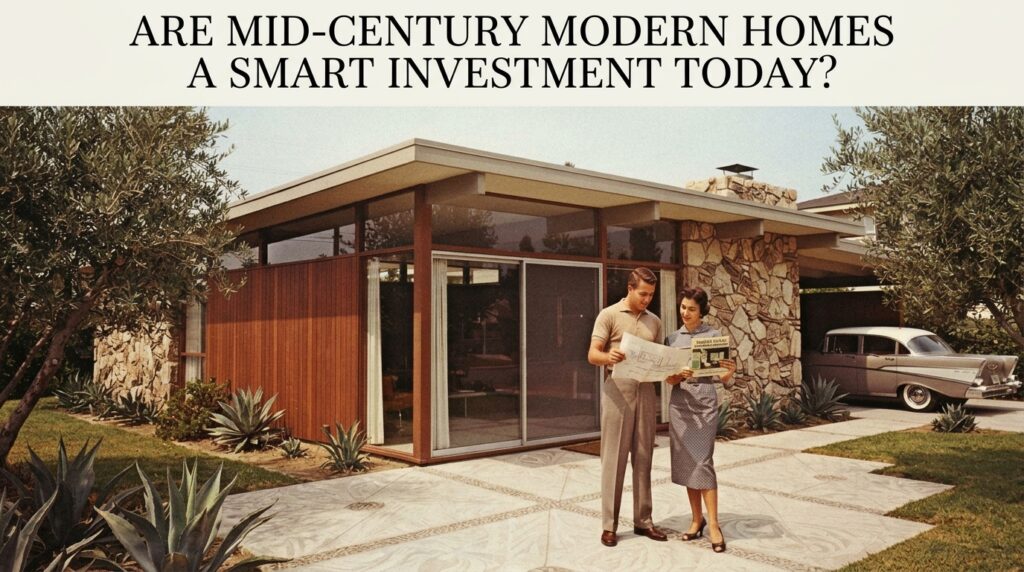
The style is easy to recognize once you know what to look for. Expect low, flat or gently sloped roofs, large windows, open floor plans and clean lines with very little ornamentation. Many of these homes sit close to the ground, with sliding glass doors that pull the backyard into the living space. Inside, you’ll often find exposed beams, built-in cabinetry and natural materials such as wood and stone.
Why the Style Has Lasted
Much of the appeal comes down to how well these homes suit modern life. Open layouts work for families who like to cook, eat and unwind in one shared space, and single-story plans appeal to anyone who wants a home they can stay in as they get older. The style looks good, but it’s also practical — a big reason demand has held steady for decades.
That steady demand is good news for resale. Still, popularity alone doesn’t make a house a good investment, so it’s worth looking at what actually drives the price.
Where the Investment Value Comes From
Like any property, mid-century homes draw their value from location, condition and buyer interest. This style adds one more factor that carries a lot of weight: how much of the original character is still intact.
Original Details Can Raise the Price
Buyers who seek out these homes will often pay more for one that still feels true to its era. Period cabinetry, terrazzo floors and original light fixtures help a listing stand out. A house remodeled with generic finishes can lose some of that edge, even if the renovation was expensive. For a closer look at what thoughtful preservation involves, see our guide to restoring a1950s dream home.
A Fixed Supply Helps
Nobody is building new original mid-century homes. In many cities, the best examples are clustered in a handful of neighborhoods and rarely come on the market. When supply is fixed and interest stays high, prices tend to hold up better than those of other homes built in the same period. It’s a far cry from the days when a new house cost a few thousand dollars — our breakdown of 1950s prices for homes, cars and groceries shows just how much values have climbed since.
Location Still Comes First
Great design can’t make up for a weak market. A well-kept house in an area where values are slipping may still struggle to appreciate. Before paying a premium for style, check recent sales nearby and how long homes in the area typically take to sell.
Value is only half the picture. The other half is what the house will cost you once you have the keys.
The Costs That Come with an Older Home
Every house from this period is now more than 50 years old, and that age brings expenses that are easy to underestimate.
Materials That Need Careful Handling
Builders of the era often used materials we now know can be hazardous. Asbestos may turn up in old floor tiles, ceiling texture, pipe insulation and siding — our article on asbestos in1950s home construction explains why it was so widely used. The EPA’s guidance on asbestos in the home notes that material in good condition is often safest left undisturbed, but any project that could disturb it should be handled by trained professionals. Homes built before 1978 may also contain lead paint, and the EPA’s overview of lead-based paint hazards is a good place to start if you plan to renovate.
Systems That May Need Replacing
Original wiring, plumbing and heating weren’t designed for the way we use power and water today. Flat roofs can leak if they haven’t been well maintained, and walls of single-pane glass lose heat in winter and let it pour in during summer. Fixing these issues can easily cost thousands and doing it without compromising the home’s character can push the bill higher.
Why Extra Inspections Are Worth It
A standard home inspection is a good start, but older houses usually call for more. A roof inspection, a camera scope of the sewer line and testing for asbestos or lead can all uncover problems early. Those reports give you a clearer budget and more leverage when you negotiate.
Knowing what repairs may lie ahead also shapes the next big decision: how to pay for the house.
How Mortgages Put These Homes Within Reach
Few buyers pay cash for a home. A mortgage lets you spread the cost over many years while you live in the house and, ideally, build equity as its value grows. Home lending has changed a great deal since these houses were first sold — our history of lending in America traces how we got from the friendly local banker to today’s online approvals.
How a Mortgage Works
A mortgage is a loan secured by the home itself. You put down part of the purchase price, and the lender covers the rest. Each monthly payment goes toward both interest and the loan balance, with most of it going to interest in the early years. Over time, a larger share goes toward paying down what you owe. Many lenders also collect money for property taxes and insurance and hold it in an escrow account.
The two most common options are fixed-rate and adjustable-rate loans. A fixed-rate loan keeps the same rate for the entire term, so your monthly payment stays predictable. An adjustable-rate loan usually starts lower but can change after a set period. The Consumer Financial Protection Bureau’s homebuying guide explains these choices and walks you through each step, from preapproval to closing day.
Why Financing Makes Sense for an Older Home
The biggest advantage is flexibility. A mortgage lets you buy a home worth far more than your savings while keeping some cash in reserve — and that cushion matters with an older house, where a new roof or updated wiring may be needed soon after you move in. Holding money back for repairs is often smarter than putting every dollar into the down payment. If you’re rethinking how you manage money day to day, our piece on how personal finance has changed over the decades is worth a read.
Some loan programs go a step further by covering renovation costs. These loans roll approved repairs into the mortgage, so you can buy a house that needs work and pay for the fixes with a single loan. For a mid-century home with aging systems, that can turn a risky purchase into a manageable one.
Your Rate Makes a Big Difference
Even a small change in your interest rate adds up over 15 or 30 years, and a lower rate can save you tens of thousands of dollars over the life of the loan. Before making an offer, check the current interest rate for mortgage loans and get quotes from more than one lender. Your credit score, down payment and existing debt all affect the rate you’re offered, so improving any of them before you apply can pay off.
Once the financing is sorted, one question remains: does this kind of home actually fit your life?
Is a Mid-Century Home Right for You?
The buyers who do best with these homes tend to share a few traits. They plan to stay for several years, giving the house time to appreciate and spreading out the cost of repairs. They’re happy to learn the home’s quirks and bring in the right experts when needed. Above all, they care enough about the design to preserve it rather than strip it away. If you’re moving from a larger house, our tips on downsizing without losing your home’s personality can help you make the transition.
If you’d rather have a house you can move into with no surprises, newer construction may suit you better, and that’s a perfectly reasonable choice. An older home rewards patience and steady care, but it’s far less forgiving to someone who expects it to behave like a new build.
Conclusion
A mid-century modern home can be a smart investment if you go in with your eyes open. Its value rests on timeless design, limited supply and enduring buyer interest. Its risks come from age, older materials and systems that need attention. The right financing bridges the two, putting a home like this within reach while leaving room for the care it needs. Buyers who weigh each of these factors and choose a house that fits their long-term plans are the ones most likely to end up with a home that keeps both its charm and its value.